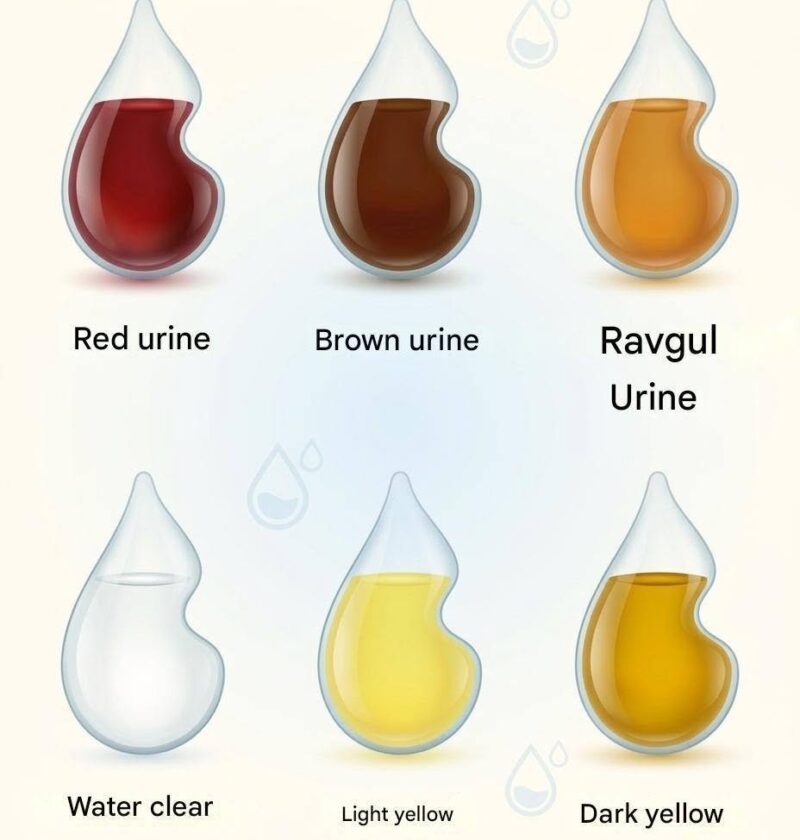
The color of your urine is one of the simplest indicators of what’s going on in your body—mostly related to hydration, diet, and sometimes medical conditions. Doctors often use a basic form of this in Urinalysis.
Here’s a clear guide:
🟡 Light yellow (pale straw)
Best sign of healthy hydration
- You’re drinking enough water
- Kidneys are working normally
💧 Clear urine
- Very well hydrated (sometimes too much water)
- Usually fine, but constant clear urine may mean overhydration
🌟 Dark yellow or amber
- Mild dehydration
- You need more fluids
- Common after sweating, heat, or fasting
🍯 Honey or dark orange
- More significant dehydration
- Can also be caused by certain vitamins (especially B-complex)
- If persistent → worth checking hydration and diet
🟠 Orange
Possible causes:
- Dehydration
- Certain medications
- Liver or bile issues (if combined with other symptoms like yellow eyes)
🌈 Pink or red
- Can be harmless (beets, berries, food dyes)
- OR could indicate blood in urine (needs medical attention if unexplained)
🟤 Brown or cola-colored
- Severe dehydration
- Muscle breakdown (rare but serious)
- Liver or kidney issues in some cases
🟢 Blue or green (rare)
- Food dyes
- Certain medications
- Rare infections
⚠️ When to see a doctor
- Blood in urine without food cause
- Brown/cola color persists
- Pain, burning, fever, or strong odor
- Sudden unexplained color change lasting >2–3 days
Bottom line
Most urine color changes are harmless and related to water intake, but persistent unusual colors can signal something worth checking.
If you want, I can also give you a quick “hydration test” you can do at home using urine color + symptoms combined.