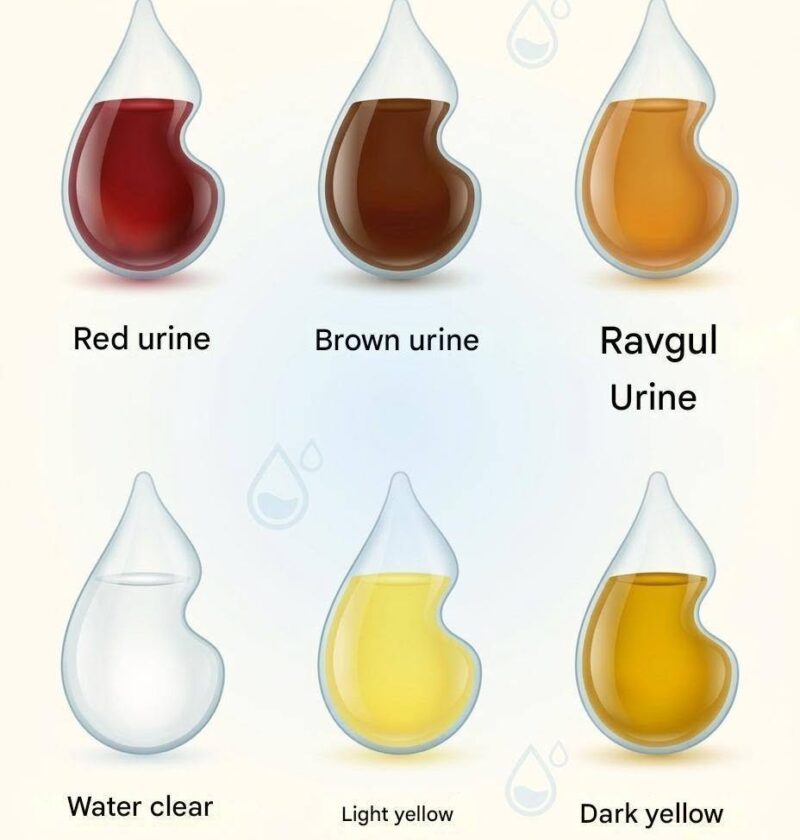
Urine color can give quick clues about hydration and sometimes health issues, but it’s not a diagnosis by itself. Here’s what different colors usually mean:
💛 1. Pale yellow (straw color)
Normal hydration status
- This is ideal and healthy
- Means you’re well hydrated
- Kidneys are working normally
💧 2. Clear urine
Overhydration
- Often from drinking too much water
- Usually harmless
- If constant, may mean you’re overhydrating or using diuretics
🌟 3. Dark yellow or amber
Dehydration
- Most common sign of mild dehydration
- You likely need more fluids
- Can also happen after sweating, exercise, or fasting
🧡 4. Orange
Dehydration or liver/bile issues (less common)
- Severe dehydration
- Could also be from certain medicines or vitamin supplements
- If persistent, may indicate liver or bile duct problems
❤️ 5. Pink or red
Hematuria (blood in urine)
Possible causes:
- Urinary tract infection (UTI)
- Kidney stones
- Strenuous exercise
- In rare cases, more serious conditions
⚠️ Always worth checking if not from food (like beetroot)
🟤 6. Brown or cola-colored
Liver disease or muscle breakdown
Possible causes:
- Liver problems (bilirubin in urine)
- Severe dehydration
- Muscle injury (rare but serious)
🟢 7. Blue or green (rare)
Drug-induced urine discoloration
- Often caused by medications, dyes, or rare infections
- Usually not dangerous but should be checked if unexplained
🧠 Key takeaway
Urine color mainly reflects:
- 💧 Hydration level (most important factor)
- 💊 Medications or supplements
- 🩺 Sometimes underlying medical conditions
⚠️ When to see a doctor
- Blood (red/pink) without clear food cause
- Dark brown urine that doesn’t improve with hydration
- Persistent unusual color + pain, fever, or burning
If you want, I can also give you a simple urine color chart you can use daily to track hydration and kidney health.