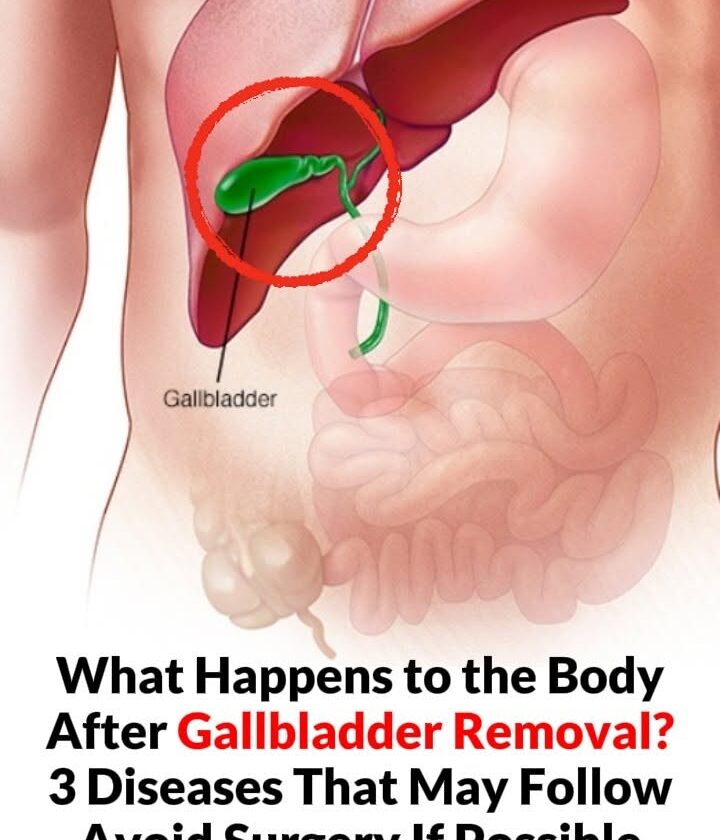
If you’re referring to the headline “What Happens to the Body After Gallbladder Removal? 3 Diseases That May Follow – Avoid Surgery If Possible,” it is overstated and potentially misleading.
Gallbladder removal (cholecystectomy) is a common operation and is often the recommended treatment for painful gallstones, recurrent gallbladder inflammation, or certain other gallbladder problems. For many people, the benefits outweigh the risks.
What changes after gallbladder removal?
The liver continues to make bile, but instead of being stored in the gallbladder, bile flows directly into the small intestine. Most people digest food normally after recovery.
Some people experience temporary or ongoing symptoms such as:
- Diarrhea or more frequent bowel movements
- Bloating or gas
- Difficulty tolerating very fatty meals
- Mild abdominal discomfort
These symptoms often improve over weeks to months.
Conditions that may occur after surgery
Some studies have found associations between gallbladder removal and certain conditions, but this does not mean the surgery causes them in everyone. Examples include:
- Bile acid diarrhea
- A small percentage of people develop persistent diarrhea because bile enters the intestine continuously. This is often treatable.
- Post-cholecystectomy syndrome
- Some people continue to have abdominal pain or digestive symptoms after surgery. The cause may be related to the bile ducts, the digestive tract, or another condition.
- Changes in digestion
- Some individuals notice increased sensitivity to large, high-fat meals, though many have no long-term dietary restrictions.
Should surgery be avoided?
Not necessarily. If gallstones are not causing symptoms, surgery is often not recommended. However, if you have:
- repeated gallbladder attacks,
- gallbladder inflammation,
- blockage of the bile ducts,
- pancreatitis caused by gallstones,
- or other complications,
then gallbladder removal can prevent serious illness and is often the standard treatment.
Bottom line
The claim that you should “avoid surgery if possible” is too broad. Gallbladder removal has risks, like any operation, but for people with clear medical indications, it is generally safe and can significantly improve quality of life and prevent dangerous complications. The decision should be based on your specific condition, symptoms, and discussion with a surgeon—not on a headline alone.