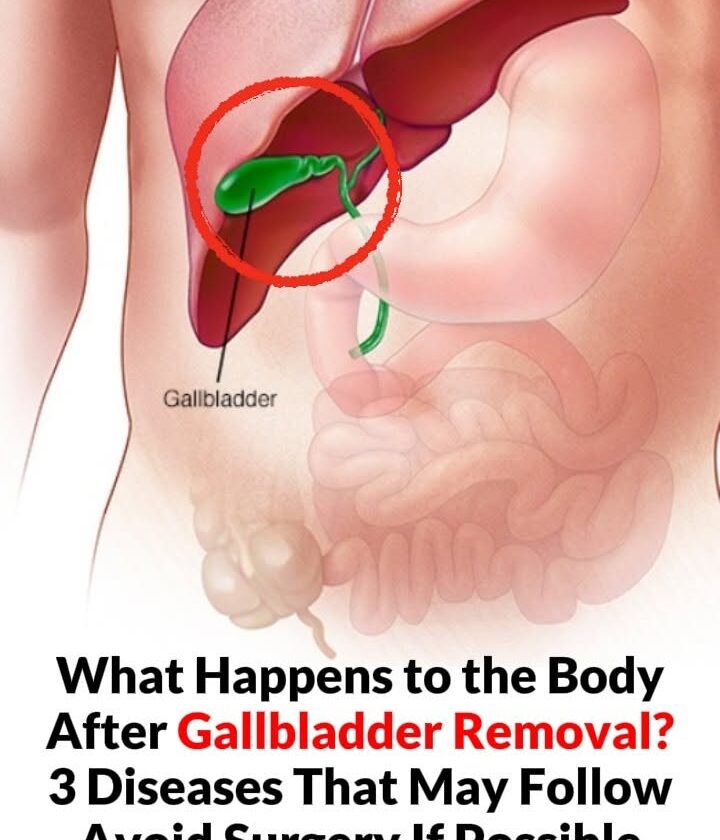
You also cannot “avoid surgery if possible” when there are clear medical indications—sometimes it is the best and safest treatment.
🧠 What actually happens after gallbladder removal
The gallbladder stores bile. After removal:
- Bile flows directly from the liver into the intestine
- Digestion still works normally
- The body adapts over time
Most people live completely normal lives.
⚠️ Possible changes after surgery (not “diseases that follow”)
1. Digestive changes (most common)
Some people may have:
- Loose stools or mild diarrhea
- Bloating after fatty meals
- Need to adjust diet temporarily
This is called post-cholecystectomy adjustment and often improves with time.
2. Post-cholecystectomy syndrome (less common)
A small number of people may experience:
- Persistent abdominal discomfort
- Indigestion-like symptoms
Often treatable and not a new disease.
3. Bile acid diarrhea (in some cases)
Excess bile entering the intestine can cause:
- Frequent loose stools
- Urgency after eating
This is manageable with diet or medication if needed.
🚫 What the headline gets wrong
There is no evidence that gallbladder removal directly causes major new diseases in most people. Claims about “3 diseases you will get” are usually exaggerated or not supported by clinical data.
🟢 Why surgery is often necessary
Doctors recommend gallbladder removal when there are:
- Recurrent painful gallstones
- Gallbladder infection (cholecystitis)
- Blocked bile ducts or complications
Leaving these untreated can be far more dangerous than surgery.
🧠 Bottom line
Gallbladder removal is not something to fear in most cases. It does not “cause diseases,” but it may cause temporary digestive adjustments in some people.
If you want, tell me your symptoms or diagnosis (like gallstones or pain after eating), and I can explain whether surgery is usually recommended in that situation.