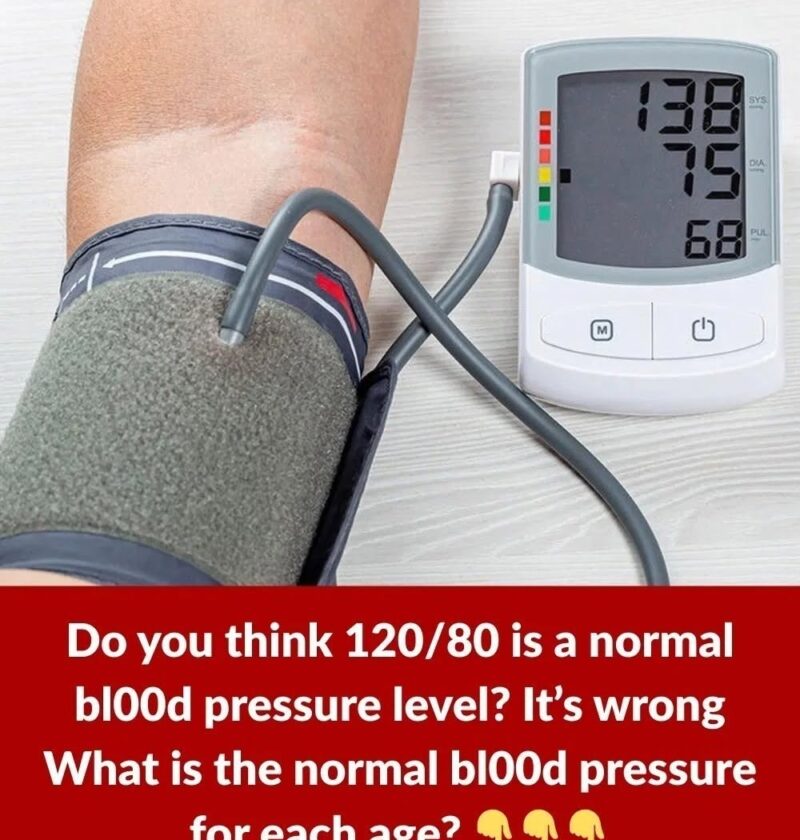
There is no separate “normal blood pressure” for every age group. Modern medical guidelines generally use the same adult blood pressure categories regardless of age.
🩺 Normal Blood Pressure for Adults
| Category | Systolic (Top Number) | Diastolic (Bottom Number) |
|---|---|---|
| Normal | Less than 120 | Less than 80 |
| Elevated | 120–129 | Less than 80 |
| High Blood Pressure (Stage 1) | 130–139 | 80–89 |
| High Blood Pressure (Stage 2) | 140 or higher | 90 or higher |
| Hypertensive Crisis* | 180 or higher | 120 or higher |
*Requires prompt medical attention, especially if accompanied by symptoms.
Blood Pressure by Age (Typical Healthy Ranges)
While the target is generally under 120/80 mmHg, average readings tend to rise somewhat with age.
| Age | Typical Healthy Range |
|---|---|
| 18–39 years | Around 90/60 to 120/80 |
| 40–59 years | Around 90/60 to 130/80 |
| 60+ years | Often under 130/80 is preferred if tolerated |
Doctors increasingly focus on overall cardiovascular risk rather than using a different “normal” value for each age.
⚠️ When to Be Concerned
You should discuss your blood pressure with a healthcare professional if:
- Readings are consistently above 130/80
- You experience headaches, dizziness, chest pain, or shortness of breath
- You have conditions such as Type 2 Diabetes, kidney disease, or heart disease
✅ How to Measure Correctly
For the most accurate reading:
- Rest for 5 minutes before measuring.
- Sit with your back supported and feet flat on the floor.
- Avoid caffeine, smoking, or exercise for 30 minutes beforehand.
- Take 2–3 readings and average them.
Quick Rule of Thumb
For most adults:
Ideal blood pressure ≈ below 120/80 mmHg
Needs attention if consistently ≥130/80 mmHg.
If you tell me your age and blood pressure reading, I can help interpret whether it falls within a healthy range.