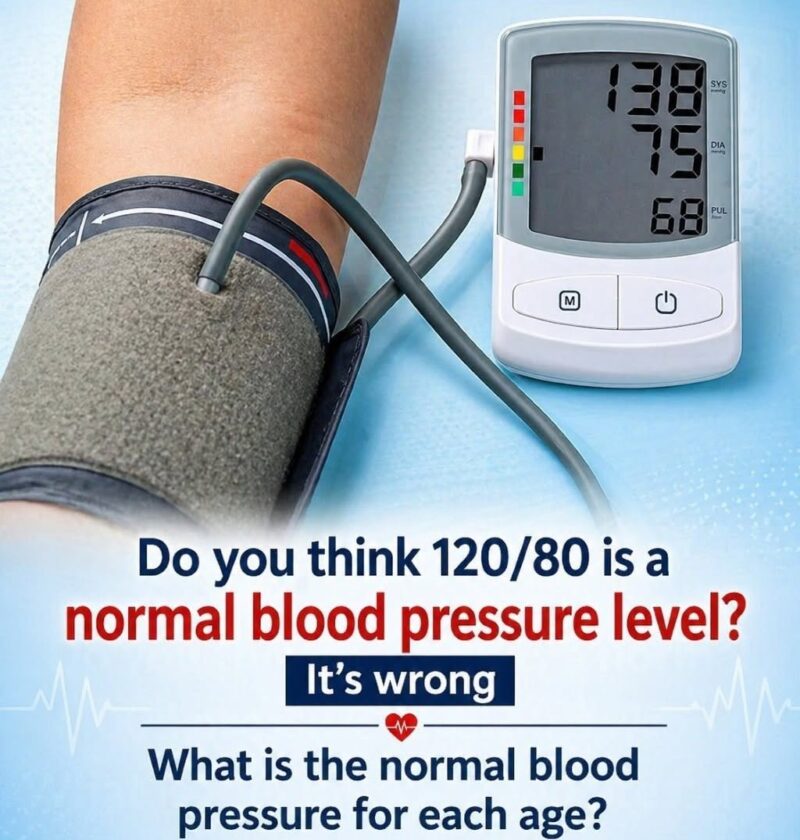
There isn’t a perfectly fixed “normal blood pressure for each age,” because modern medicine defines blood pressure mainly by overall cardiovascular risk, not age-specific “ideal” numbers (for adults). Still, there are typical ranges doctors use.
🧠 Normal Blood Pressure (General Guidelines)
👶 Children (varies by height/age percentiles)
Blood pressure in children is based on percentiles, not fixed numbers:
- Roughly: 90–110 / 55–75 mmHg is often considered typical in school-age children
- Doctors compare readings to age/height charts
🧑 Teens (13–17 years)
- Normal: ~110–120 / 65–80 mmHg
- Similar to adults as they finish growth
🧑⚕️ Adults (18–59 years)
✅ Normal
- Less than 120 / 80 mmHg
⚠️ Elevated
- 120–129 / less than 80
🟠 High blood pressure (Hypertension)
- Stage 1: 130–139 / 80–89
- Stage 2: ≥140 / ≥90
👴 Older adults (60+ years)
Older adults often have slightly higher readings due to stiffening arteries, but targets are still similar:
- Many guidelines still aim for: below 130–140 / below 80–90
- Doctors may individualize targets depending on heart, kidney, or stroke risk
📊 Quick Summary Table
| Age Group | Typical “Normal” Range |
|---|---|
| Children | ~90–110 / 55–75 (varies) |
| Teens | ~110–120 / 65–80 |
| Adults | <120 / <80 |
| Older adults | Often <130–140 / <80–90 (individualized) |
⚠️ Important Notes
- A single reading is not enough to diagnose hypertension.
- Blood pressure changes with stress, sleep, caffeine, and activity.
- The most important number in adults is usually systolic (top number) for long-term risk.
🚨 When to worry
- Consistently ≥140/90 → needs medical evaluation
- ≥180/120 → emergency (especially with chest pain, headache, weakness, or vision changes)
If you want, I can also tell you:
- how to measure blood pressure correctly at home
- or what “dangerous” vs “normal fluctuation” looks like in real life readings