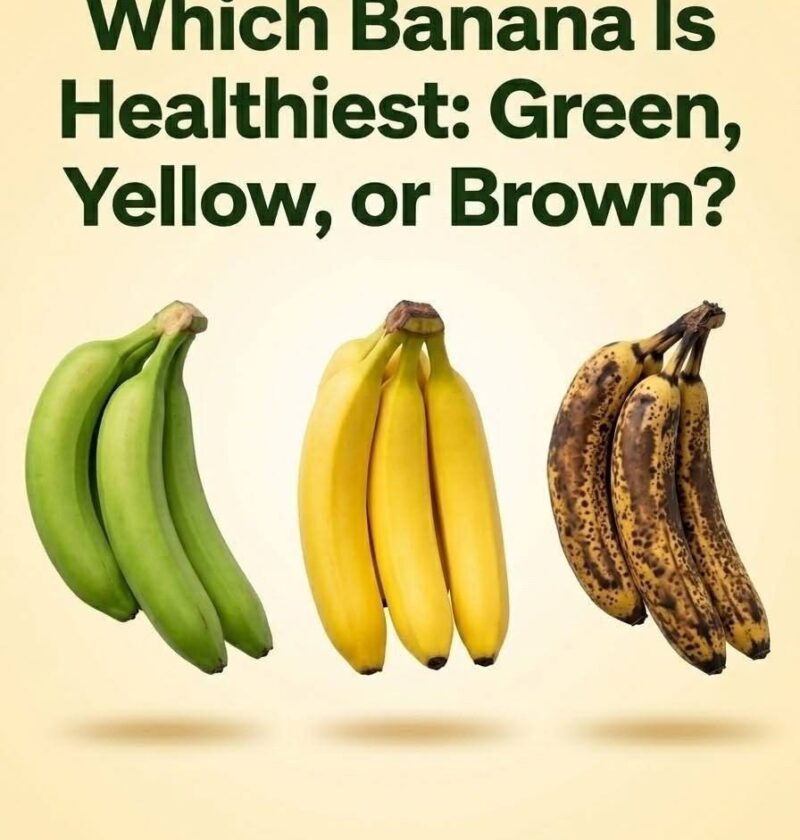
There isn’t a single “healthiest” banana—the best choice depends on your nutritional goals. The biggest difference is usually ripeness, not the variety.
1. Green (unripe) bananas
Best for: Blood sugar control and gut health
- Higher in resistant starch, which feeds beneficial gut bacteria.
- Causes a slower rise in blood sugar than ripe bananas.
- Less sweet and firmer.
- May be harder for some people to digest.
2. Yellow bananas (just ripe)
Best for: Everyday nutrition
- Good source of potassium, vitamin B6, vitamin C, and fiber.
- Easier to digest than green bananas.
- A balanced choice for most people.
3. Yellow bananas with brown spots
Best for: Quick energy
- Starches have converted into more simple sugars, making them sweeter.
- Easier to digest.
- Nutrient content remains similar, though the banana has a higher glycemic effect than a greener one.
Nutrients in a medium banana
- About 105 calories
- 3 g fiber
- 422 mg potassium
- Good source of vitamin B6
- Contains vitamin C and small amounts of magnesium and other nutrients.
Bottom line
- For blood sugar management: Green or slightly green bananas may be a better choice.
- For general health: A ripe yellow banana is an excellent all-around option.
- For exercise or a quick snack: A ripe banana with brown spots provides easily available carbohydrates for energy.
For most people, any banana can be part of a healthy diet. Factors like your overall eating pattern, portion size, and individual health conditions matter more than choosing one stage of ripeness over another.