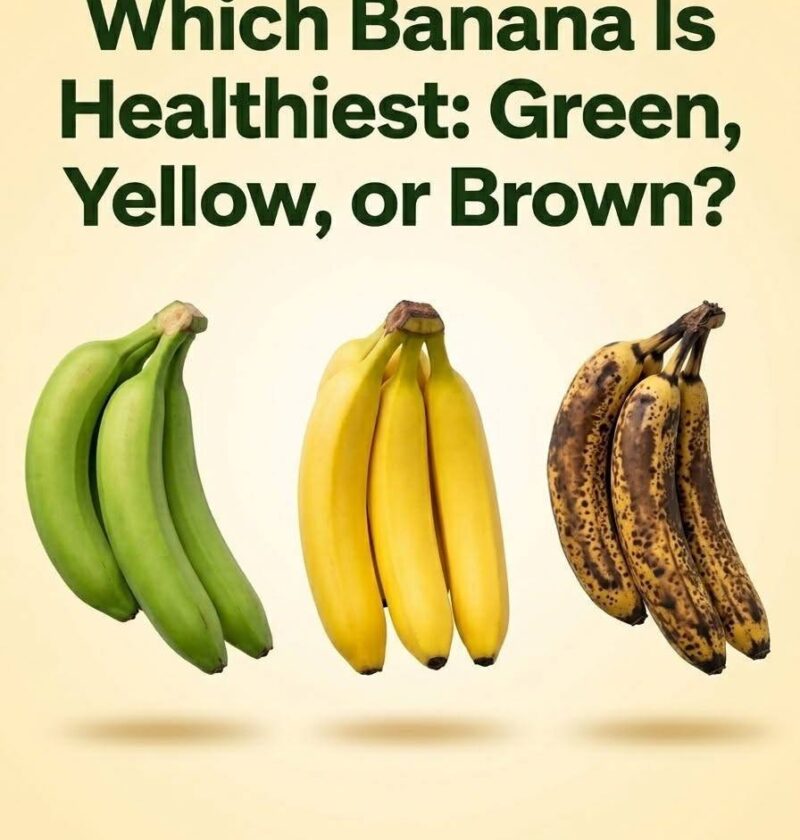
There isn’t one banana that’s universally the “healthiest.” The best choice depends on your nutritional goals, but here’s how bananas compare as they ripen:
🍌 Green (Unripe) Bananas
Best for: Blood sugar control and gut health
- Higher in resistant starch, which feeds beneficial gut bacteria.
- Causes a slower rise in blood sugar than ripe bananas.
- More filling for some people.
- Can be firmer and harder to digest for some individuals.
🍌 Yellow Bananas
Best for: Everyday nutrition
- A good balance of starch and natural sugars.
- Easy to digest.
- Rich in potassium, vitamin B6, and vitamin C.
- Suitable for most people.
🍌 Spotted or Brown Bananas
Best for: Quick energy and baking
- More starch has converted into natural sugars, making them sweeter.
- Easier to digest.
- The vitamin and mineral content remains largely similar to that of yellow bananas.
- Great for smoothies, banana bread, or a quick energy boost.
Are brown bananas less healthy?
No. Although they contain more natural sugar than green bananas, the difference is due to the ripening process—not added sugar. They still provide fiber, potassium, and other nutrients.
Bottom line
- For blood sugar management: Choose greener bananas.
- For most people: A ripe yellow banana is an excellent all-around choice.
- For quick energy or easier digestion: A spotted or brown banana is a good option.
Regardless of ripeness, bananas are a nutritious fruit and can be part of a healthy diet. The overall quality of your diet matters much more than choosing one stage of banana ripeness over another.