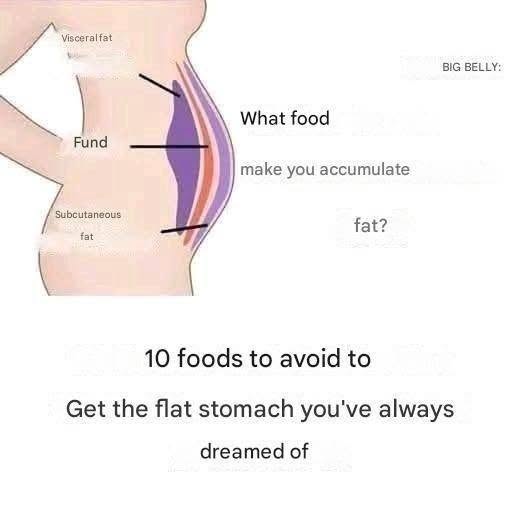
A “flat stomach” is influenced by many factors—genetics, body composition, digestion, activity level, sleep, and overall diet. No single food automatically causes belly fat, and avoiding foods alone will not guarantee a flat stomach. However, some foods can contribute to bloating, excess calories, or water retention for some people.
Foods that many people find helpful to limit include:
- Sugary drinks
- Sodas, sweetened juices, and energy drinks can add a lot of calories without making you feel full.
- Highly processed snacks
- Chips, cookies, and packaged sweets are often high in refined carbohydrates, salt, and added fats.
- Refined carbohydrates
- Large amounts of white bread, pastries, and some baked goods may make it harder to manage calorie intake.
- Excess salty foods
- High-sodium foods can cause temporary water retention and bloating.
- Fried foods
- They are often calorie-dense and may cause digestive discomfort for some people.
- Large amounts of alcohol
- Alcohol can add extra calories and may affect appetite and sleep.
- Foods that trigger your personal bloating
- Some people react to foods such as beans, onions, dairy, or certain artificial sweeteners.
- Processed meats
- Foods like sausages and deli meats are often high in sodium and saturated fat.
- High-sugar desserts
- Frequent intake can make it harder to maintain a calorie balance.
- Oversized portions of any food
- Even healthy foods can contribute to weight gain when eaten beyond your needs.
For a healthier approach to a leaner midsection:
- Eat enough protein at meals.
- Include vegetables and high-fiber foods.
- Drink water regularly.
- Strength train and stay active.
- Sleep well.
If you mean a flatter stomach from reducing bloating rather than losing belly fat, the best foods to adjust can be different.