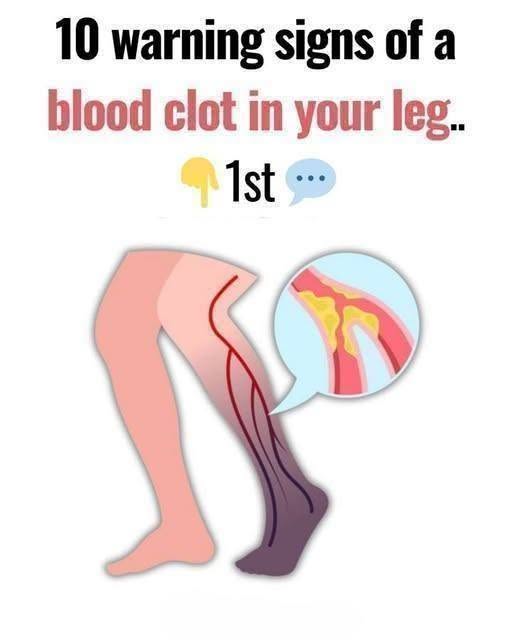
10 Warning Signs of a Blood Clot in the Leg You Should Know
A blood clot in a deep vein of the leg, known as deep vein thrombosis (DVT), is a serious condition that requires prompt medical attention. If left untreated, part of the clot can break off and travel to the lungs, causing a pulmonary embolism (PE), which is a medical emergency.
Here are 10 warning signs to be aware of:
1. Swelling in One Leg
Sudden swelling in one leg, particularly in the calf or thigh, is one of the most common signs of DVT. The affected leg may appear noticeably larger than the other.
2. Pain or Tenderness
The pain often starts in the calf and may feel like cramping, soreness, or a persistent ache. It may worsen when standing or walking.
3. Warmth Over the Affected Area
The skin over the clot may feel warmer than the surrounding skin because of inflammation.
4. Red or Discolored Skin
The affected area may become red, bluish, or darker than the surrounding skin.
5. Enlarged Surface Veins
Veins near the surface of the skin may become more visible or swollen as blood flow is redirected.
6. Leg Heaviness
Some people experience a feeling of heaviness or tightness in the affected leg, making it uncomfortable to walk.
7. Persistent Calf Cramping
A cramp that doesn’t improve with stretching or rest, especially when accompanied by swelling, should be evaluated.
8. Shiny or Tight Skin
Swelling can make the skin appear stretched, shiny, or feel unusually tight.
9. Pain When Flexing the Foot
Some people notice discomfort in the calf when pulling the toes upward. However, this sign is not reliable on its own and should not be used to diagnose or rule out a blood clot.
10. Symptoms of a Pulmonary Embolism (Emergency)
If a clot travels to the lungs, symptoms may include:
- Sudden shortness of breath
- Sharp chest pain that may worsen with deep breaths
- Coughing, sometimes with blood
- Rapid heartbeat
- Feeling faint or collapsing
These symptoms require immediate emergency medical care.
Risk Factors
Your risk of DVT is higher if you have:
- Recent surgery or hospitalization
- Prolonged immobility (such as long flights or bed rest)
- Pregnancy or the weeks after childbirth
- Cancer or cancer treatment
- Obesity
- Smoking
- A personal or family history of blood clots
- Certain inherited clotting disorders
- Estrogen-containing birth control or hormone therapy