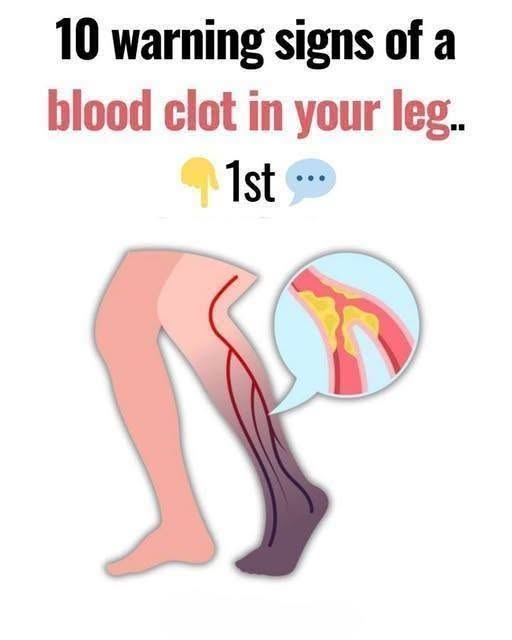
10 Warning Signs of a Blood Clot in the Leg You Should Know
A blood clot in a deep vein of the leg is called deep vein thrombosis (DVT). It can be dangerous because a clot may travel to the lungs and cause a pulmonary embolism, which is a medical emergency.
Not everyone with DVT has symptoms, but these warning signs should be taken seriously:
1. Swelling in One Leg
- Sudden swelling in one calf, ankle, or leg is one of the most common signs.
- The affected leg may appear larger than the other.
2. Leg Pain or Tenderness
- Pain may feel like a cramp, soreness, or aching, often in the calf or thigh.
- It may worsen when walking or standing.
3. Warmth in the Affected Area
- The skin over the clot may feel warmer than surrounding areas.
4. Red or Discolored Skin
- The skin may appear red, purple, or darker than usual over the affected area.
5. A Feeling of Heaviness
- Some people describe the leg as feeling heavy, tight, or uncomfortable.
6. Enlarged or More Visible Veins
- Surface veins may become more noticeable because blood flow is affected.
7. Sudden Leg Fatigue
- An unusual feeling of tiredness or discomfort in one leg may occur.
8. Tightness or Swelling That Does Not Improve
- Persistent swelling, especially without a clear injury, should be checked.
9. New Unexplained Leg Symptoms After Long Immobility
Risk may be higher after:
- Long flights or car trips
- Bed rest or hospitalization
- Surgery
- Extended periods of sitting
10. Symptoms of a Possible Lung Clot (Emergency)
A clot that travels to the lungs may cause:
- Sudden shortness of breath
- Chest pain (especially with breathing)
- Rapid heartbeat
- Coughing, sometimes with blood
- Dizziness or fainting
Call emergency services immediately if these symptoms occur.
Who May Be at Higher Risk of DVT?
Risk can increase with:
- Previous blood clots
- Recent surgery or injury
- Long periods of immobility
- Pregnancy or recent childbirth
- Certain hormone medications
- Cancer
- Smoking
- Older age
- Some inherited clotting conditions
What to Do If You Suspect a Blood Clot
Do not massage the painful or swollen area, and do not wait for symptoms to “go away.” Contact a healthcare professional promptly for evaluation. Diagnosis usually requires medical assessment and may include an ultrasound scan of the leg.
Early recognition and treatment can greatly reduce the risk of serious complications.