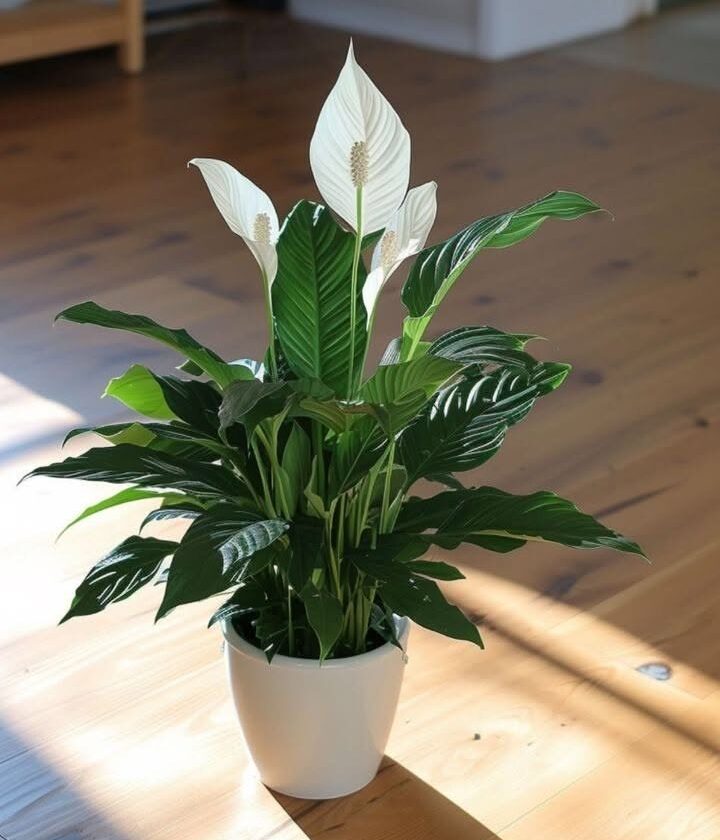
Here are 11 ways to encourage your peace lily to bloom:
- Give it bright, indirect light
- Peace lilies need light to flower. A spot near a window with filtered sunlight is usually ideal. Too little light often leads to healthy leaves but no blooms.
- Avoid direct harsh sunlight
- Strong afternoon sun can scorch leaves. Use a sheer curtain or place the plant a few feet away from a sunny window.
- Keep a consistent watering routine
- Water when the top inch of soil feels dry. Avoid letting the plant sit in soggy soil, which can damage roots.
- Use well-draining soil
- A quality indoor potting mix with good drainage helps prevent root problems and supports flowering.
- Provide the right humidity
- Peace lilies are tropical plants and often bloom better with moderate-to-high humidity. A humidifier, pebble tray, or grouping plants together can help.
- Maintain warm temperatures
- Keep the plant away from cold drafts, heaters, and air conditioners. Temperatures around 18–29°C (65–85°F) are generally comfortable.
- Fertilize during the growing season
- Use a balanced houseplant fertilizer at reduced strength during spring and summer. Too much fertilizer can cause leaf growth at the expense of flowers.
- Don’t use an oversized pot
- Peace lilies often bloom better when slightly root-bound. A pot that is too large can encourage roots and leaves instead of flowers.
- Remove old flowers and damaged leaves
- Cutting off spent blooms and yellowing leaves helps the plant direct energy toward new growth.
- Repot only when needed
- Repot when roots are crowded or water runs straight through the pot. Avoid frequent repotting, which can stress the plant.
- Be patient and give it a seasonal rhythm
- Mature, healthy peace lilies may bloom more readily after periods of steady care. Some plants naturally flower more in certain seasons.
Common reason for no blooms: A peace lily that looks healthy but never flowers is often simply not getting enough bright, indirect light. Moving it to a brighter location is frequently the biggest improvement.