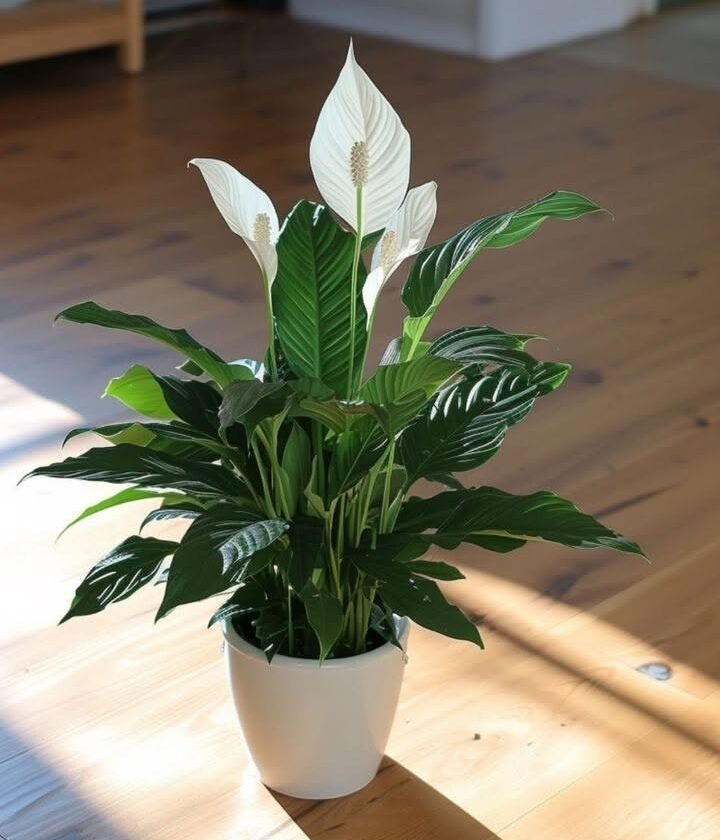
11 Ways to Help Your Peace Lily BloomPeace lilies (Spathiphyllum) are popular houseplants known for their glossy leaves and white flower-like blooms. If your peace lily is healthy but not flowering, it may need changes in light, care, or nutrients.
1. Give it bright, indirect light
- Peace lilies bloom best with plenty of filtered light.
- Too little light often leads to lots of leaves but few or no flowers.
- Avoid harsh direct sunlight, which can scorch the leaves.
2. Keep a consistent watering routine
- Water when the top inch or two of soil feels dry.
- Avoid letting the plant sit in soggy soil, which can cause root problems.
3. Use good drainage
- A pot with drainage holes helps prevent waterlogged roots.
- Empty excess water from trays or decorative pots.
4. Provide enough humidity
- Peace lilies naturally prefer humid conditions.
- Dry indoor air can cause leaf browning and stress.
5. Feed it during the growing season
- A balanced houseplant fertilizer used occasionally can support growth and flowering.
- Too much fertilizer can damage roots and reduce plant health.
6. Avoid too much nitrogen
- High-nitrogen fertilizers encourage leafy growth but may reduce flowering.
7. Keep the temperature comfortable
- Peace lilies generally prefer warm indoor temperatures.
- Protect them from cold drafts and sudden temperature changes.
8. Repot when root-bound
- A slightly snug pot is fine, but severely crowded roots can affect growth.
- Repot when roots are circling heavily or water runs through too quickly.
9. Clean the leaves
- Dust can block light absorption.
- Wipe leaves gently with a damp cloth.
10. Remove old blooms and damaged leaves
- Trimming spent flowers helps the plant focus energy on new growth.
11. Be patient
- Peace lilies often bloom when conditions are stable.
- A healthy plant may take time to adjust after changes in light, watering, or location.
Tip: If your peace lily has beautiful leaves but no flowers, the most common causes are not enough light, too much nitrogen fertilizer, or inconsistent care.