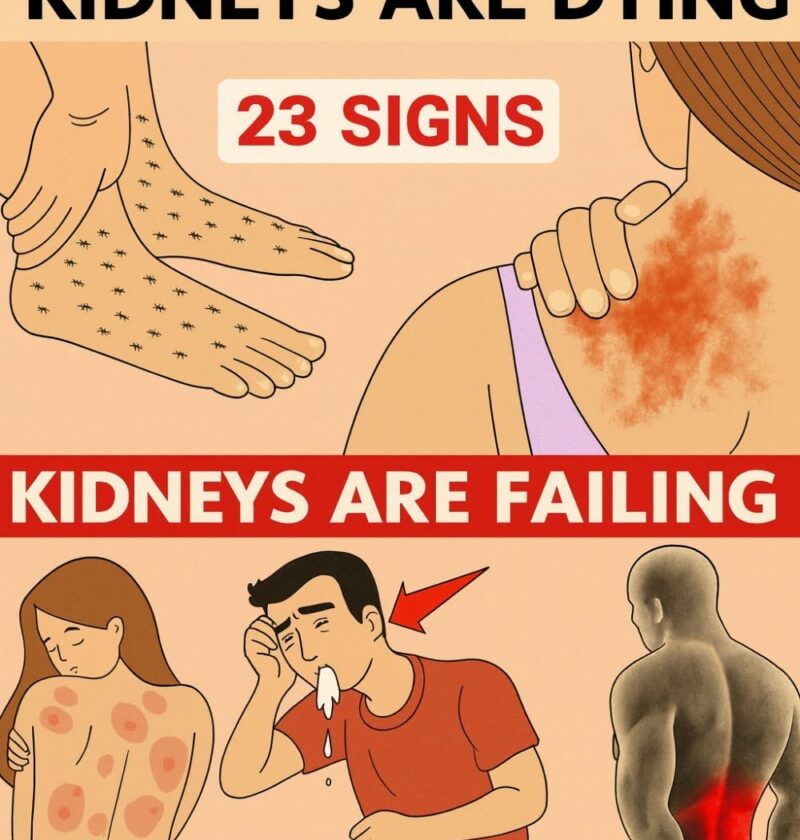
23 Strange Signs Your Kidneys Might Be in Trouble
Kidney disease can be surprisingly difficult to recognize because early chronic kidney disease often causes few or no symptoms. In many cases, blood and urine testing detects kidney problems before a person feels sick.
That said, as kidney function declines, several less-obvious symptoms can appear.
1. Foamy or unusually bubbly urine
Persistent foaminess can occur when excess protein is leaking into the urine. It isn’t diagnostic by itself, but persistent changes deserve evaluation.
2. Needing to urinate more often
Changes in urinary frequency—particularly increased nighttime urination—can occur with kidney disease, although many other conditions can cause it.
3. Urinating much less than usual
A significant reduction in urine output can occur with worsening kidney function or acute kidney injury and should be taken seriously.
4. Swollen ankles or feet
When the kidneys have difficulty removing excess salt and fluid, fluid can accumulate and cause edema, particularly in the legs, ankles, and feet.
5. Puffy eyes
Swelling around the eyes—especially in the morning—can sometimes occur when kidney disease causes fluid retention or significant protein loss.
6. Persistent fatigue
Advanced kidney disease can cause significant tiredness and reduced energy. Anemia associated with kidney disease can contribute to this symptom.
7. Trouble concentrating
Difficulty concentrating or feeling mentally “foggy” can occur in more advanced kidney disease.
8. Itchy skin
Persistent itching can occur when kidney function becomes significantly impaired.
9. Very dry skin
Dry, itchy skin is another symptom reported with more advanced kidney disease.
10. Muscle cramps
Kidney disease can contribute to electrolyte and mineral disturbances, which may cause muscle cramping.
11. Poor appetite
A reduced appetite can develop as kidney disease advances.
12. Nausea
Waste products accumulating in the bloodstream can contribute to nausea in advanced kidney disease.
13. Vomiting
Vomiting can accompany advanced kidney disease, although it has many other possible causes.
14. Unintentional weight loss
Losing weight without trying—especially together with poor appetite or nausea—can occur with advanced kidney disease.
15. Trouble sleeping
People with kidney disease may experience sleep problems. Sleep apnea is also more common among people with kidney disease.
16. Shortness of breath
Fluid accumulation can contribute to breathing difficulties, particularly in advanced disease. However, shortness of breath can have many potentially serious causes.
17. Swelling in the hands
Fluid retention isn’t limited to the legs. Some people can develop swelling in their hands or face.
18. Numbness or tingling
Advanced kidney disease can be associated with nerve-related symptoms such as numbness.
19. Changes in the color of urine
Pink, red, brown, or cola-colored urine can indicate blood or other abnormalities. This isn’t necessarily kidney failure, but visible blood in the urine should be medically evaluated.
20. A urine-like or ammonia-like breath odor
In advanced kidney disease, changes in breath odor can occur because waste products accumulate in the blood.
21. High blood pressure
High blood pressure is both an important risk factor for kidney disease and a possible consequence of impaired kidney function.
22. Muscle weakness
Changes in electrolytes and other complications of advanced kidney disease can contribute to weakness.
23. Feeling generally unwell without an obvious explanation
As kidney disease becomes advanced, the buildup of waste and disturbances in fluid and electrolytes can produce a general feeling of illness, tiredness, nausea, or weakness