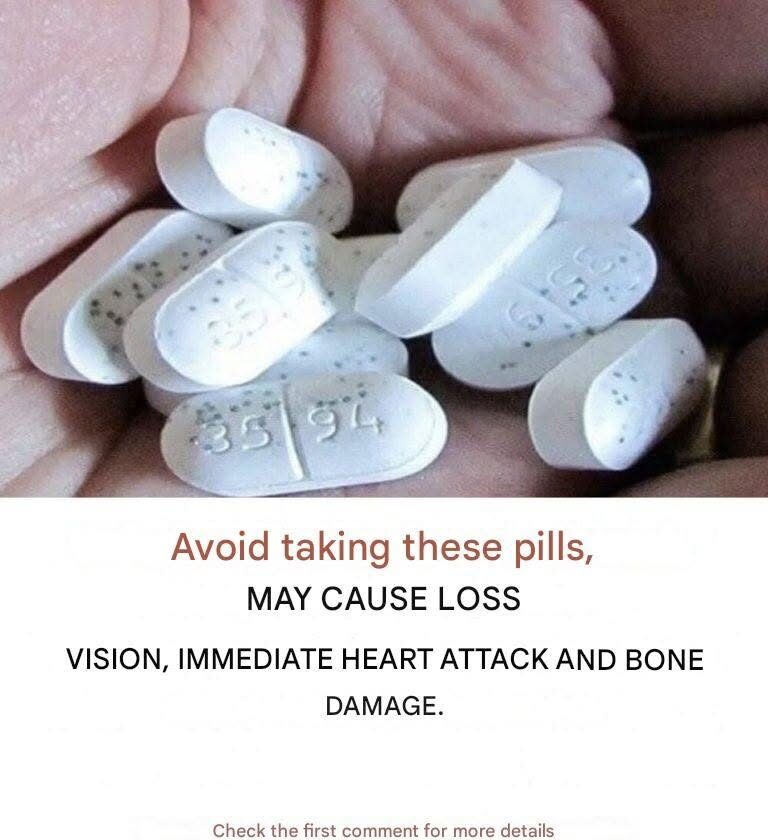
⚠️ Tablets That Can Increase the Risk of Blood Clots, Heart Attack, or Stroke
This headline needs some clarification. No medication should be described as automatically causing blood clots or heart attacks. The risk depends on the specific medicine, dose, duration, and the person’s underlying health.
1. Certain NSAID painkillers
Non-aspirin NSAIDs—including ibuprofen, naproxen, diclofenac, and similar medicines—can increase the risk of serious cardiovascular events such as heart attack and stroke. The risk can increase with higher doses and longer use.
People with heart disease, high blood pressure, kidney disease, or a previous stroke should discuss NSAID use with a healthcare professional.
2. Combined hormonal contraceptive pills
Birth-control pills containing estrogen plus a progestin can increase the risk of blood clots. The risk is uncommon, but it can be more important in people with certain risk factors, such as smoking or a history of clotting problems. FDA notes that blood clots, heart attacks, and strokes are rare but serious potential complications.
3. Some medicines may interact with cardiovascular drugs
The danger isn’t always that one tablet causes a clot by itself. Drug combinations can sometimes alter blood pressure, bleeding/clotting risk, kidney function, or the effectiveness of another medication.
That’s why it’s important to tell your doctor or pharmacist about all prescription medicines, OTC painkillers, vitamins, and supplements you’re taking.