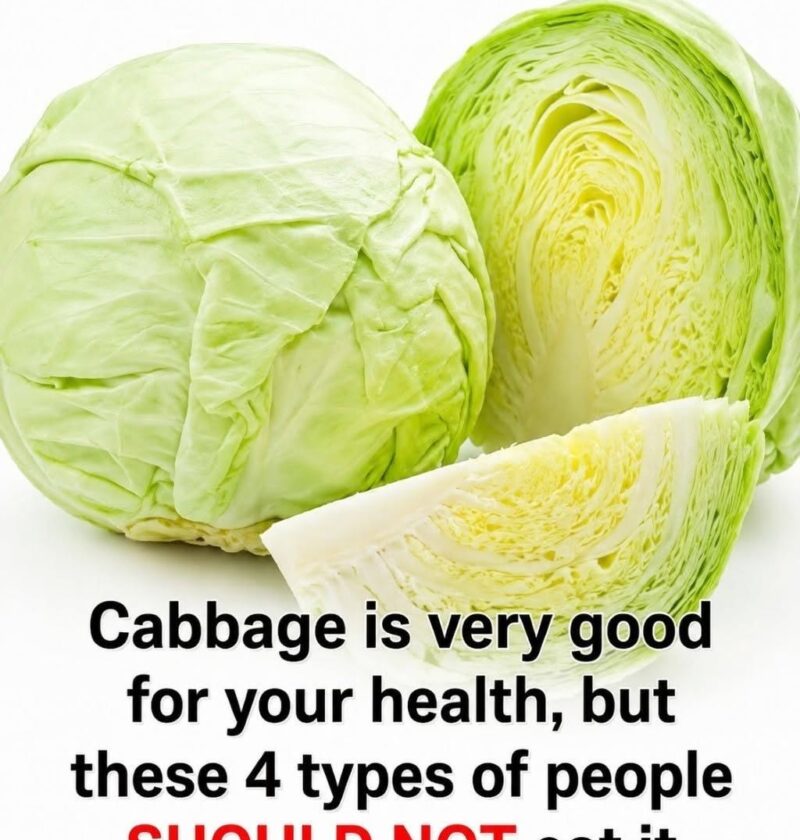
4 Types of People Who May Need to Be Careful With Cabbage
Cabbage is nutritious and most people do not need to avoid it. The idea that there are four groups who must completely stop eating cabbage is misleading. However, certain people may need to limit it or discuss their intake with a healthcare professional.
People taking warfarin
Cabbage contains vitamin K, which affects blood clotting. If you take warfarin, the important thing isn’t necessarily to avoid cabbage—it is to keep your vitamin-K intake reasonably consistent from day to day. Sudden major changes can affect how warfarin works.
O
Office of Dietary Supplements
+1
People with certain thyroid or iodine problems
Cabbage is a cruciferous vegetable containing compounds called goitrogens. In people with adequate iodine intake, eating normal amounts of cabbage is generally not considered a problem. The concern is greater for people with iodine deficiency who consume very large amounts of cruciferous vegetables.
O
Office of Dietary Supplements
People who develop significant digestive symptoms from it
Cabbage can cause gas, bloating, or abdominal discomfort in some people. If you consistently experience these symptoms, reducing the portion or trying cooked cabbage may help.
People with a medical condition requiring a specific diet
Someone following a medically prescribed diet—for example, around certain gastrointestinal conditions or before a medical procedure—may temporarily need to modify their intake. The appropriate restriction depends on the specific condition rather than on cabbage itself.
Bottom line
For most people, cabbage is a healthy vegetable and doesn’t need to be eliminated. The biggest medication-related issue is vitamin K if you’re taking warfarin—and even then, consistency is usually more important than complete avoidance.
O
Office of Dietary Supplements
O
Sources