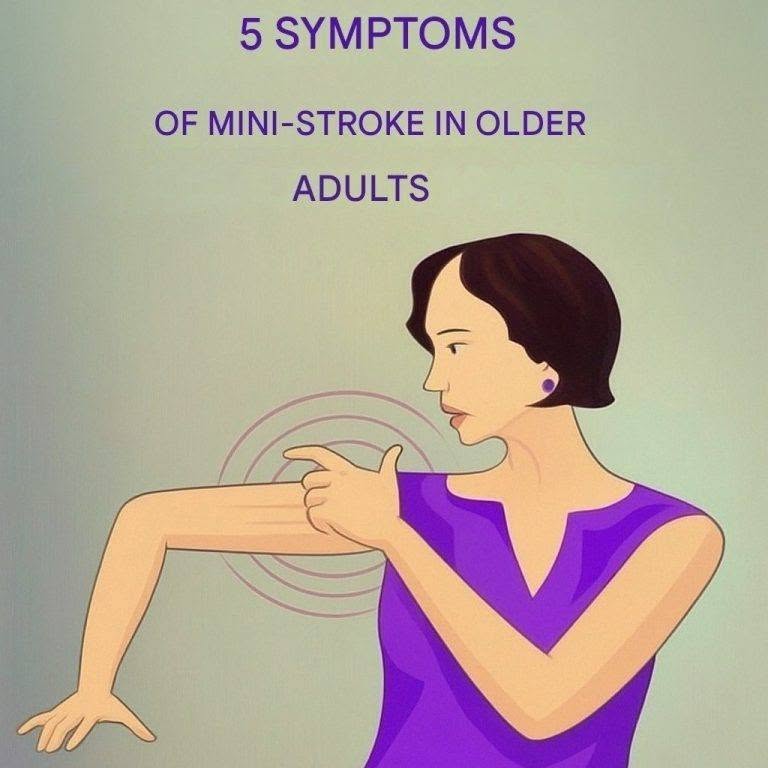
5 Symptoms of a “Mini-Stroke” in Seniors That Shouldn’t Be Ignored
A TIA (transient ischemic attack) is often called a “mini-stroke.” It happens when blood flow to part of the brain is temporarily interrupted. The symptoms can disappear within minutes or hours, but a TIA is a warning sign of possible stroke and requires urgent medical assessment. (nhs.uk)
🚨 5 important symptoms
- Sudden weakness or numbness — particularly on one side of the face, arm or leg.
- Sudden facial drooping — one side of the mouth or face may droop.
- Sudden speech problems — slurred speech, difficulty finding words, or trouble understanding others.
- Sudden vision problems — blurred, double, or loss of vision in one or both eyes.
- Sudden dizziness or loss of balance — difficulty walking, coordination problems or severe vertigo. (nhs.uk)
A sudden, severe headache without a known cause can also occur with stroke and requires emergency evaluation. (CDC)
⏰ Don’t wait for symptoms to disappear
This is especially important: you cannot reliably tell at home whether symptoms are a TIA or a full stroke. Even if everything returns to normal, emergency medical evaluation is still needed. A TIA can signal a substantially increased risk of a stroke in the days and weeks afterward. (nhs.uk)
Remember FAST:
F — Face drooping
A — Arm weakness
S — Speech difficulty
T — Time to call emergency services
If these symptoms are happening now, call your local emergency service immediately. Do not drive yourself to the hospital.
Bottom line: A “mini-stroke” isn’t something to watch at home just because the symptoms go away. Sudden neurological symptoms deserve urgent medical attention.