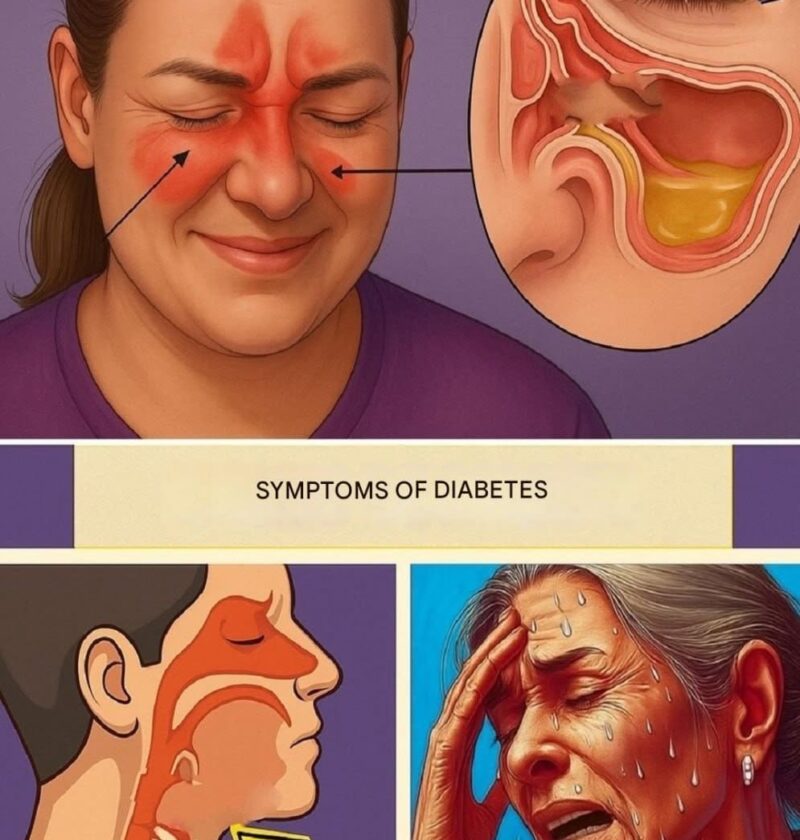
The phrase “7 Warning Signs of Hidden Diabetes” refers to symptoms that can occur when blood sugar levels are too high but the condition has not yet been diagnosed. However, type 2 diabetes can develop slowly and many people have no noticeable symptoms at first—which is why screening is important for people at higher risk.
7 possible warning signs of diabetes
- Increased thirst
- High blood sugar causes the body to pull more water from tissues, leading to excessive thirst.
- Frequent urination
- The kidneys try to remove extra glucose from the blood, causing more frequent trips to the toilet (often noticeable at night).
- Unusual tiredness
- Glucose may not be getting into cells effectively, leaving you feeling low on energy.
- Blurred vision
- High blood sugar can temporarily change fluid levels in the eye and affect vision.
- Slow-healing cuts or frequent infections
- Elevated blood glucose can affect immune function and circulation.
- Tingling, numbness, or burning in hands or feet
- Long-term high blood sugar can damage nerves (diabetic neuropathy).
- Unexplained weight loss
- More common with untreated type 1 diabetes, but can also occur in some people with type 2 diabetes.
Other signs that can occur
- Increased hunger
- Dry mouth
- Itchy skin
- Recurrent thrush or urinary infections
- Darkened, thickened patches of skin (often around the neck or armpits), called acanthosis nigricans, which can be linked with insulin resistance.
Who should consider a diabetes check?
Risk is higher with factors such as:
- Being overweight or having excess abdominal fat
- Family history of diabetes
- High blood pressure or abnormal cholesterol
- Previous gestational diabetes
- Increasing age
- A sedentary lifestyle
A simple blood test (such as HbA1c or fasting glucose) can help identify diabetes or prediabetes.
If you have symptoms like excessive thirst, frequent urination, unexplained weight loss, or persistent fatigue, it is worth discussing with a healthcare professional rather than relying on symptom lists alone.