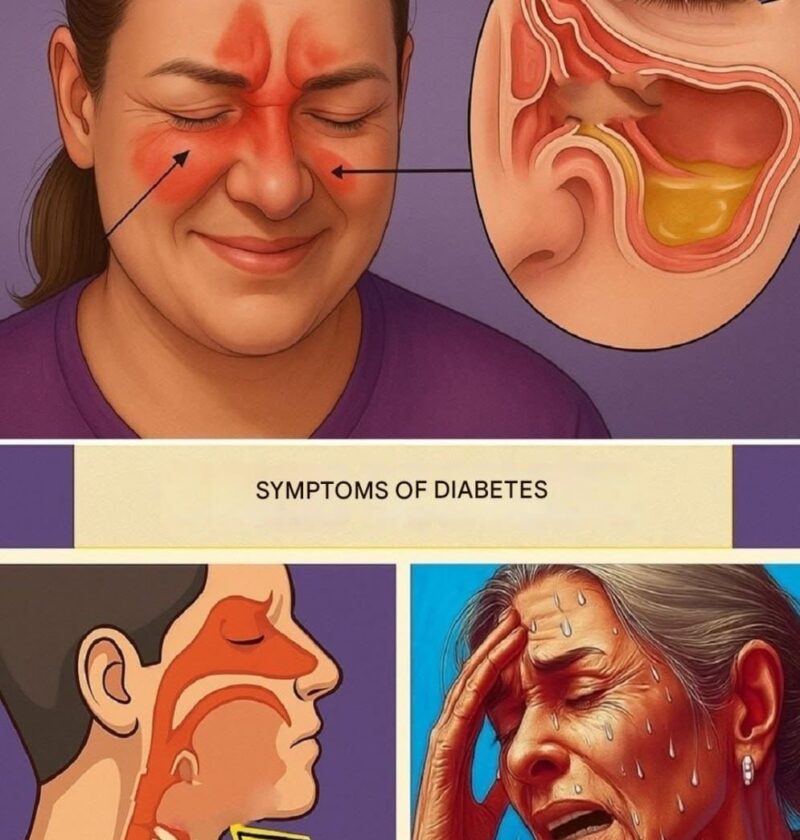
Hidden or undiagnosed diabetes can develop gradually, and many people don’t recognize the symptoms at first. Here are seven common warning signs that may suggest diabetes and warrant medical evaluation.
1. Frequent urination
High blood sugar causes the kidneys to work harder to remove excess glucose, leading to increased urination, especially at night.
2. Excessive thirst
Because the body loses more fluid through urination, you may feel unusually thirsty even when drinking plenty of water.
3. Increased hunger
Despite eating normally, cells may not be able to use glucose effectively for energy, resulting in persistent hunger.
4. Unexplained fatigue
Feeling unusually tired or lacking energy can occur when the body’s cells aren’t getting enough usable fuel from glucose.
5. Blurred vision
High blood sugar can affect the lenses of the eyes, causing temporary vision changes or blurriness.
6. Slow-healing cuts and frequent infections
Elevated blood sugar can impair circulation and immune function, making wounds heal more slowly and increasing susceptibility to infections.
7. Numbness or tingling in the hands or feet
Over time, high blood sugar can damage nerves, leading to tingling, burning, numbness, or pain in the extremities—a condition called Diabetic Neuropathy.
Other possible symptoms
- Unexplained weight loss
- Darkened patches of skin, especially on the neck or underarms (known as Acanthosis Nigricans)
- Recurrent yeast infections
- Dry mouth
When to get tested
You should consider screening if:
- You have several of these symptoms.
- You are overweight or obese.
- You have a family history of diabetes.
- You have high blood pressure or abnormal cholesterol levels.
- You have a history of gestational diabetes.
Diabetes is diagnosed with blood tests such as fasting blood glucose, HbA1c, or an oral glucose tolerance test. Early diagnosis can help prevent complications and improve long-term health outcomes. If you’re experiencing these symptoms, it’s a good idea to discuss them with a healthcare professional.