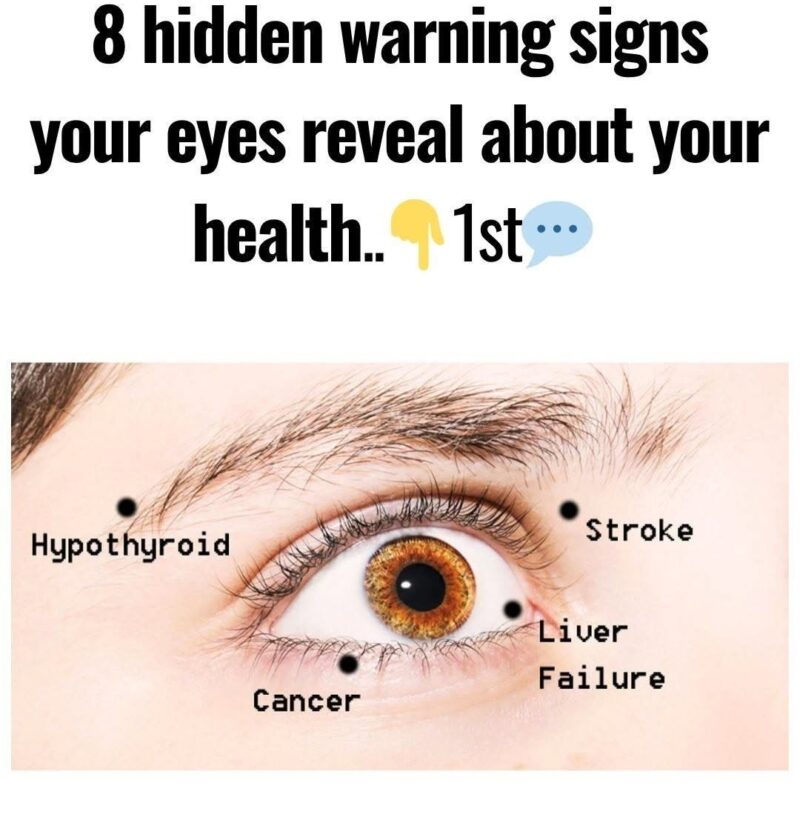
Your eyes can sometimes provide clues about your health, but they can’t diagnose a disease on their own. Here are 8 changes worth knowing about:
Yellowing of the whites of the eyes — can indicate jaundice, which may be related to liver, gallbladder, or other problems and should be medically assessed.
N
nhs.uk
Blurred vision — can occur with high blood sugar and diabetes, among many other causes. Persistent or new blurred vision deserves evaluation.
N
nhs.uk
+1
New floaters or flashing lights — can sometimes signal a problem with the retina, particularly if they appear suddenly or are accompanied by a curtain/shadow over your vision.
Bulging eyes — can be a sign of thyroid eye disease, particularly Graves’ disease.
N
nhs.uk
+1
Red, painful eyes with vision changes — shouldn’t automatically be dismissed as simple irritation. Eye infections, inflammation, glaucoma and other conditions can cause this combination.
N
nhs.uk
Double vision — can have numerous causes, including problems affecting the eye muscles, nerves, or brain. New double vision warrants medical assessment.
N
nhs.uk
Changes in peripheral vision — gradually losing side vision can occur with glaucoma, while sudden loss can be an emergency.
Diabetes-related changes — diabetic retinopathy may initially have no symptoms at all, which is why people with diabetes need recommended eye screening rather than waiting for vision problems.
N
nhs.uk
+1
🚨 Don’t wait with sudden vision changes
Sudden loss of vision, sudden double vision, severe eye pain, or a sudden major change in vision needs urgent medical attention.
N
nhs.uk
Bottom line: Your eyes can reveal clues about conditions such as diabetes or thyroid disease, but many eye changes are caused by ordinary eye conditions. An eye examination is much more reliable than trying to diagnose yourself from appearance alone.
N
Sources