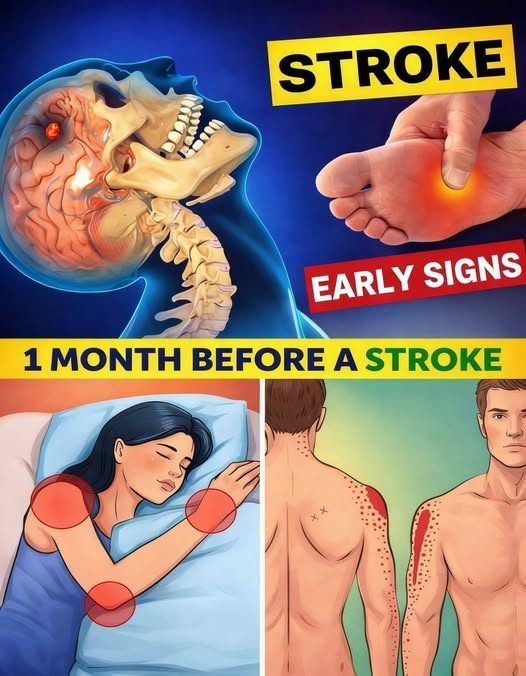
Headlines claiming that a stroke always gives “8 warning signs one month before” are misleading. Many strokes happen suddenly without any advance warning. However, some people experience symptoms of a transient ischemic attack (TIA)—sometimes called a “mini-stroke”—before a major stroke. A TIA can occur hours, days, or occasionally longer before a stroke and requires urgent medical attention.
Possible warning signs that should not be ignored
- Sudden weakness or numbness
- Especially on one side of the face, arm, or leg.
- Speech changes
- Slurred speech, trouble finding words, or difficulty understanding others.
- Sudden vision problems
- Blurred vision, double vision, or loss of vision in one or both eyes.
- Dizziness or loss of balance
- Sudden trouble walking, coordination problems, or unexplained falls.
- Sudden severe headache
- Especially a new, intense headache with no clear cause.
- Confusion or difficulty thinking
- Sudden changes in awareness, understanding, or memory.
- Trouble swallowing
- New difficulty swallowing can occur with some strokes.
- Temporary symptoms that disappear
- Symptoms that last minutes and then resolve may still be a TIA.
9 ways to reduce stroke risk
- Control blood pressure
- High blood pressure is one of the biggest stroke risk factors.
- Manage cholesterol
- Follow medical advice on diet, lifestyle, and medications if prescribed.
- Control blood sugar
- Diabetes management helps reduce blood vessel damage.
- Do regular physical activity
- Aim for consistent movement appropriate for your health level.
- Eat a heart-healthy diet
- Emphasize vegetables, fruits, whole grains, lean proteins, and healthy fats.
- Avoid smoking and tobacco products
- Smoking significantly increases stroke risk.
- Maintain a healthy weight
- Reducing excess weight can improve blood pressure and metabolic health.
- Limit alcohol
- Excessive alcohol intake can raise stroke risk.
- Take prescribed medications correctly
- Especially medicines for blood pressure, cholesterol, diabetes, or heart rhythm problems.
Remember FAST
- F — Face: Does one side of the face droop?
- A — Arms: Is one arm weak or numb?
- S — Speech: Is speech strange or difficult?
- T — Time: Call emergency services immediately.
If stroke-like symptoms appear—even if they go away—seek urgent medical care. Early evaluation can help prevent a more serious stroke.