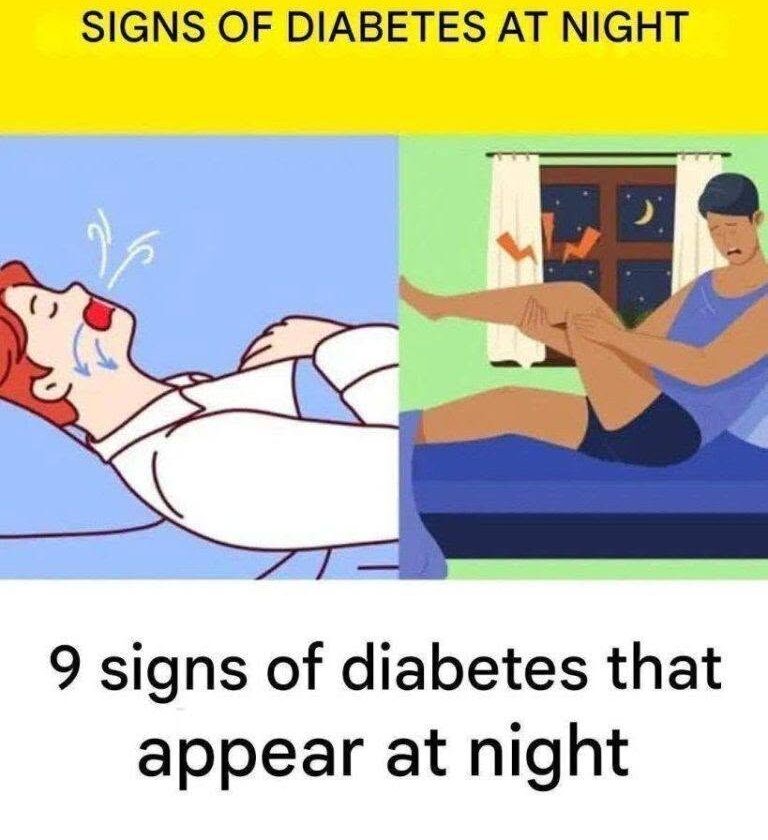
9 Signs of Diabetes That May Appear at Night
Diabetes can sometimes cause symptoms that are more noticeable during the night because blood sugar changes continue while you sleep. These signs do not always mean you have diabetes, but repeated symptoms are worth discussing with a healthcare professional.
1. Frequent Urination During the Night
High blood sugar can cause the kidneys to remove extra glucose through urine, leading to:
- Waking up several times to urinate
- Increased thirst afterward
2. Excessive Thirst at Night
Fluid loss from frequent urination may cause:
- A dry mouth
- Strong thirst before bed or after waking
3. Night Sweats
Blood sugar dropping too low during sleep (especially in people taking insulin or certain diabetes medicines) can trigger:
- Sweating
- Shaking
- Restlessness
- Waking suddenly
4. Difficulty Sleeping
Blood sugar fluctuations, frequent urination, thirst, or discomfort may contribute to poor sleep quality.
5. Tingling or Numbness in the Feet
Diabetes-related nerve damage (diabetic neuropathy) can cause:
- Burning sensations
- Pins-and-needles feelings
- Numbness, often worse at night
6. Increased Hunger After Waking
Some people with blood sugar problems may wake feeling unusually hungry, especially if glucose levels are not well controlled.
7. Leg Cramps or Restlessness
Nerve changes, circulation issues, or mineral imbalances associated with diabetes may contribute to nighttime leg discomfort.
8. Slow-Healing Cuts or Skin Issues
While not only a nighttime symptom, noticing persistent skin problems, infections, or wounds can be a sign of blood sugar problems.
9. Dry Mouth or Unusual Fatigue in the Morning
High blood sugar overnight may contribute to:
- Waking with a dry mouth
- Feeling tired despite getting enough sleep
When to Consider Getting Checked
Talk with a healthcare professional about diabetes testing if you have:
- Several of these symptoms together
- Increased thirst and urination
- Unexplained weight loss
- Blurred vision
- A family history of diabetes
- Risk factors such as high blood pressure or excess weight
Common tests include:
- Fasting blood glucose
- HbA1c (average blood sugar over about 2–3 months)
- Oral glucose tolerance test
Early detection and good blood sugar management can help reduce the risk of complications.