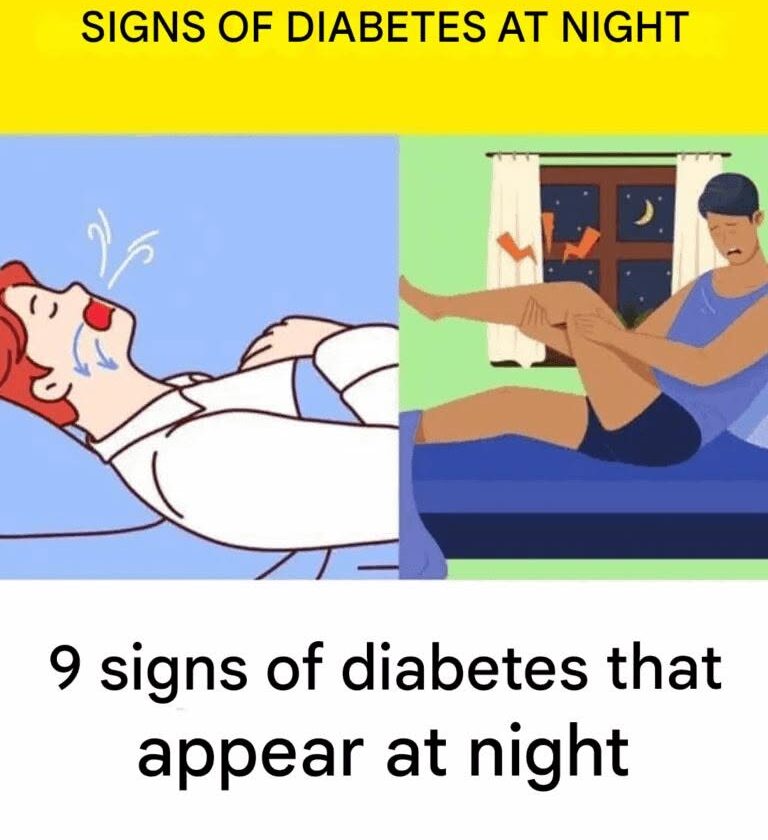
The headline “9 Signs of Diabetes That Appear at Night” is a bit misleading—diabetes symptoms can occur at any time of day, but some may become more noticeable at night because you are resting and less distracted.
Possible nighttime signs that can occur with high blood sugar include:
1. Frequent urination during the night (nocturia)
High blood sugar can cause the kidneys to remove extra glucose through urine, leading to more trips to the bathroom.
2. Excessive thirst
Losing more fluid through urination can make you feel unusually thirsty, including waking up thirsty at night.
3. Night sweats
Some people with diabetes experience sweating episodes, especially during low blood sugar (hypoglycemia), which can happen overnight in people taking certain diabetes medications.
4. Waking up very hungry
Low blood sugar during sleep may trigger hunger or a feeling of needing to eat.
5. Tingling, burning, or numbness in the feet
Diabetic nerve damage (neuropathy) can cause symptoms that are more noticeable at night when there are fewer distractions.
6. Trouble sleeping
Blood sugar swings, frequent urination, thirst, or discomfort from nerve symptoms can disrupt sleep.
7. Blurred vision on waking
High blood sugar can temporarily affect the lens of the eye, causing changes in vision.
8. Slow-healing cuts or recurring infections
These are not specifically nighttime symptoms, but they can be signs of diabetes that people may notice over time.
9. Unexplained fatigue
Poorly controlled blood sugar can leave you feeling tired even after a full night’s sleep.
When to consider getting checked
A healthcare professional may recommend diabetes testing if you have symptoms such as:
- Frequent urination and increased thirst
- Unexplained weight loss
- Persistent fatigue
- Increased infections
- Numbness or tingling in the feet