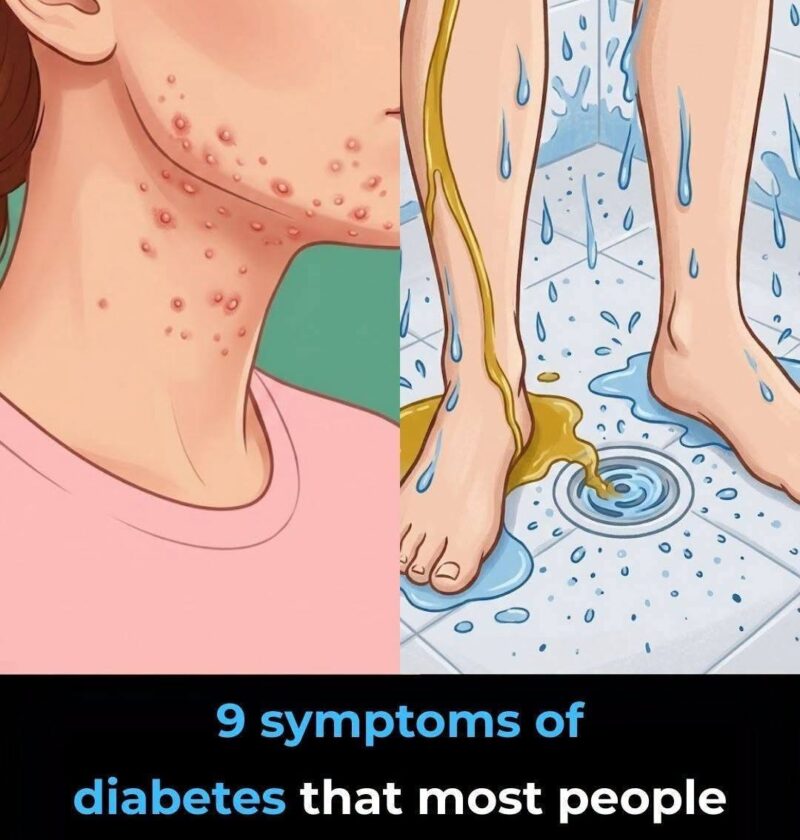
9 Symptoms of Diabetes That Many People May Overlook
Diabetes can develop gradually, and some early signs may seem unrelated or easy to dismiss. Recognizing possible symptoms can help people seek testing earlier.
1. Increased thirst
Feeling unusually thirsty or needing more fluids than usual can happen when high blood sugar causes the body to lose more water through urine.
2. Frequent urination
Needing to urinate often—especially waking up several times at night—can be a sign that the kidneys are trying to remove excess glucose from the blood.
3. Unexplained tiredness
Persistent fatigue may occur because glucose is not being used effectively by the body for energy.
4. Blurred vision
High blood sugar can temporarily change fluid balance in the eye and affect the lens, causing blurry vision.
5. Slow-healing cuts or wounds
High blood glucose can affect circulation and the immune system, which may slow the healing process.
6. Tingling or numbness in hands or feet
A sensation of “pins and needles,” burning, or reduced feeling can occur when prolonged high blood sugar damages nerves (diabetic neuropathy).
7. Increased hunger despite eating
Some people feel very hungry because the body cannot properly use glucose for energy.
8. Unexplained weight loss
Losing weight without trying can occur when the body starts breaking down fat and muscle for energy because glucose cannot enter cells properly.
9. Frequent infections or skin changes
Repeated infections (such as urinary tract infections, yeast infections, or skin infections) may occur more often when blood sugar is elevated.
Other possible signs
- Dry mouth
- Itchy skin
- Darkened patches of skin, especially around the neck or armpits (a condition called acanthosis nigricans, often linked with insulin resistance)
- Erectile difficulties in some men
When to get checked
Consider speaking with a healthcare professional about diabetes testing if you have symptoms, especially if you also have risk factors such as:
- Family history of diabetes
- Overweight or obesity
- High blood pressure
- History of gestational diabetes
- Low physical activity levels
- Age-related risk factors
A simple blood test, such as fasting blood glucose or HbA1c, can help determine whether blood sugar levels are in a healthy range.