First: what the products actually do
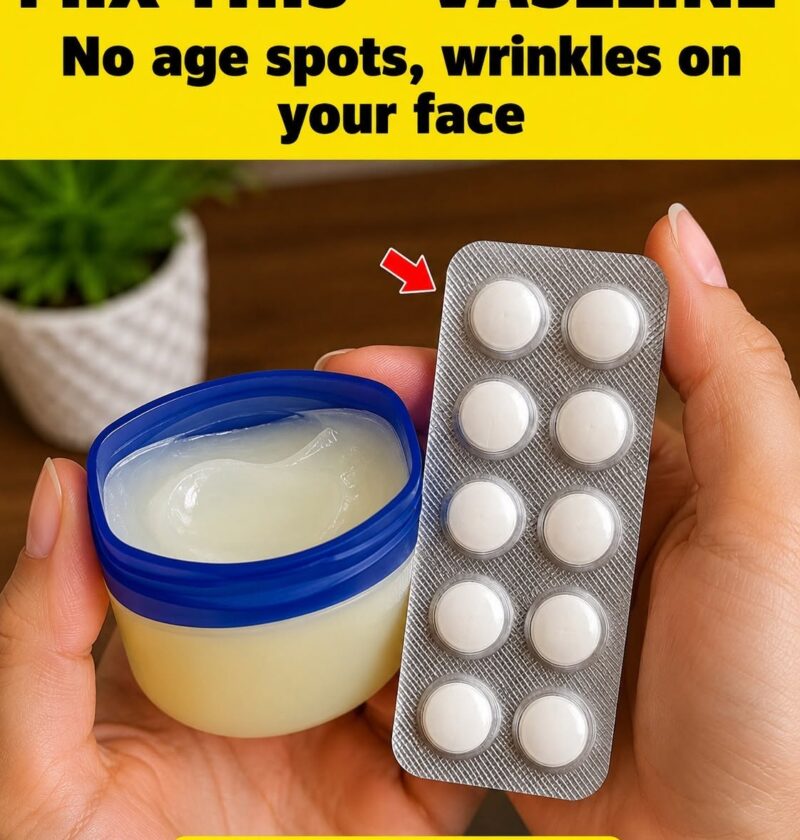
Vitamin D is important for bone and immune health, but it is not a topical anti-aging ingredient. It doesn’t meaningfully affect wrinkles, skin texture, or collagen when mixed into creams.
Vaseline (petroleum jelly) works differently:
- It creates a protective barrier on the skin
- It helps lock in moisture
- It can make skin feel softer temporarily by preventing dryness
Why “mix Vitamin D + Vaseline for younger skin” is misleading
There’s no good evidence that:
- Vitamin D applied to skin reduces wrinkles
- Mixing supplements into petroleum jelly improves absorption or skin aging
- This combination stimulates collagen or “reverses aging”
Vitamin D in supplement form is designed to work through digestion and blood levels, not topical application.
What can make skin look temporarily better
Vaseline alone can:
- Make fine lines look less visible by hydrating the outer skin layer
- Improve the appearance of dry or flaky skin overnight
But that effect is cosmetic and temporary, not structural skin rejuvenation.
Evidence-based ways to support younger-looking skin
If the goal is actually skin aging prevention, dermatology supports:
- Daily sunscreen (most important)
- Retinoids (like tretinoin)
- Moisturizers with ceramides or hyaluronic acid
- Healthy sleep and hydration
Bottom line
Mixing Vitamin D with petroleum jelly is not a proven anti-aging treatment. At best, the Vaseline may moisturize your skin—but the Vitamin D part won’t meaningfully contribute.
If you want, tell me your skin concern (wrinkles, dryness, dark spots, etc.), and I can suggest a simple routine that actually has evidence behind it.