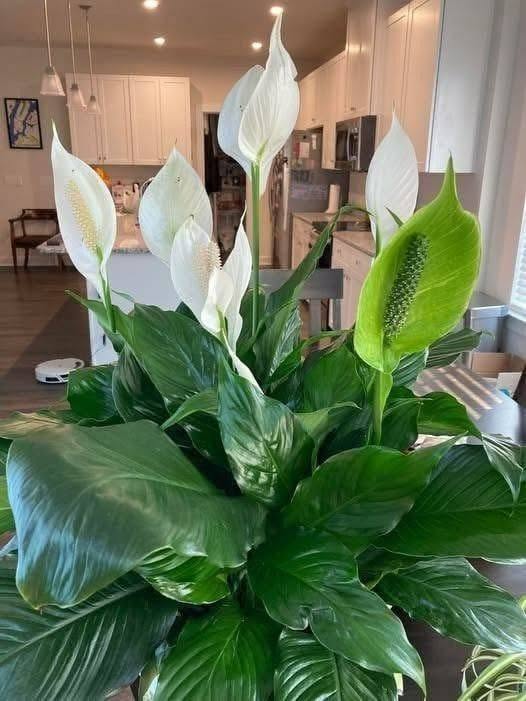
How to Get Your Peace Lily to Flower More – Tips for Lush Blooms
Spathiphyllum (commonly called a peace lily) is a popular indoor plant known for its glossy leaves and white flower-like blooms. If your peace lily has lots of leaves but few flowers, it may need a few care adjustments.
1. Give it the right light
Peace lilies prefer bright, indirect light.
- Too little light → healthy leaves but few or no flowers.
- Too much direct sunlight → leaf scorch and yellowing.
A spot near a window with filtered light is often ideal.
2. Don’t overwater
Peace lilies like evenly moist soil but do not like sitting in soggy conditions.
Tips:
- Water when the top inch or two of soil feels dry.
- Make sure the pot has drainage holes.
- Yellow leaves can be a sign of overwatering.
3. Use the right fertilizer
Flowering requires energy. During the growing season (spring and summer):
- Use a balanced houseplant fertilizer at the recommended dilution.
- Avoid over-fertilizing, which can cause leaf growth at the expense of blooms.
4. Keep humidity comfortable
Peace lilies are tropical plants and appreciate humidity.
You can help by:
- Grouping plants together.
- Using a humidifier.
- Placing the pot on a tray with pebbles and water (keeping the pot above the water line).
5. Repot only when needed
A peace lily that is extremely root-bound may struggle.
Repot when:
- Roots are circling tightly.
- Water runs straight through the pot.
- Growth has slowed significantly.
Choose a pot only slightly larger than the current one.
6. Remove old flowers and leaves
Cut spent blooms and yellowing leaves near the base. This helps the plant direct energy toward new growth.
7. Be patient with mature plants
Peace lilies often flower more when they are mature and receiving consistent care. Some plants naturally bloom more than others.
Common reasons a peace lily won’t bloom
- Not enough light
- Too much fertilizer
- Overwatering
- Stress from temperature changes
- Lack of nutrients
- Immature plant