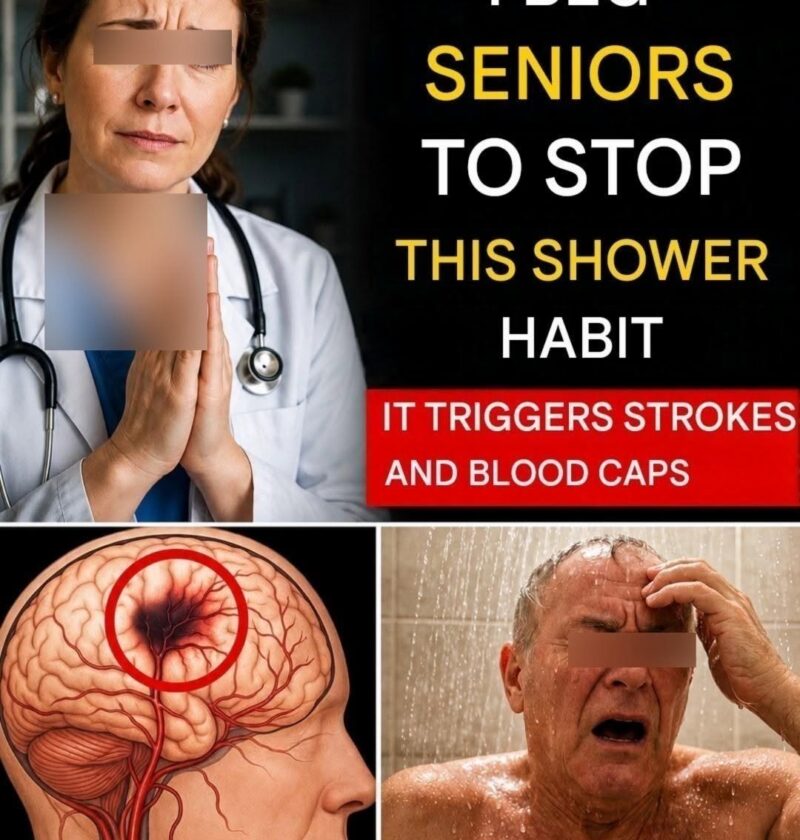
“This Shower Habit Increases Stroke Risk Overnight” — What Seniors Should Know
Claims about a single shower habit causing a stroke overnight are often exaggerated online. Showering itself does not directly cause strokes in healthy people. However, certain shower-related situations may temporarily affect blood pressure, balance, and circulation — especially in older adults or people with heart and blood vessel conditions.
Here are habits worth paying attention to:
1. Taking Extremely Hot Showers
Very hot water can cause blood vessels to widen, which may lead to:
- A sudden drop in blood pressure
- Dizziness or fainting
- Increased risk of falls
Safer approach:
- Use warm (not very hot) water.
- Avoid long, steamy showers if you feel lightheaded.
2. Standing Up Quickly After a Shower
Heat can relax blood vessels, and standing suddenly may cause a blood pressure drop (orthostatic hypotension).
Safer approach:
- Sit for a moment after bathing if you feel dizzy.
- Move slowly when getting out of the shower.
3. Showering When You Are Dehydrated or Ill
Low fluid levels, fever, vomiting, or diarrhea can affect blood pressure and circulation.
Safer approach:
- Maintain adequate hydration unless your doctor has prescribed fluid restriction.
4. Very Cold Water Exposure
Sudden cold water can cause a rapid increase in:
- Heart rate
- Blood pressure
- Stress response
People with heart disease or uncontrolled hypertension should be cautious with sudden temperature changes.
5. Ignoring Warning Symptoms
A shower is a common place for people to notice symptoms such as:
- Sudden weakness or numbness on one side
- Trouble speaking
- Facial drooping
- Severe sudden headache
- Loss of balance
These can be signs of stroke and require urgent medical attention.
Stroke Prevention Tips for Seniors
✅ Keep blood pressure controlled
✅ Take prescribed medicines consistently
✅ Stay physically active as appropriate
✅ Avoid smoking
✅ Manage diabetes and cholesterol
✅ Attend regular health checkups
A safe shower routine is usually about avoiding sudden temperature extremes, preventing falls, and managing health conditions, rather than avoiding showers themselves.