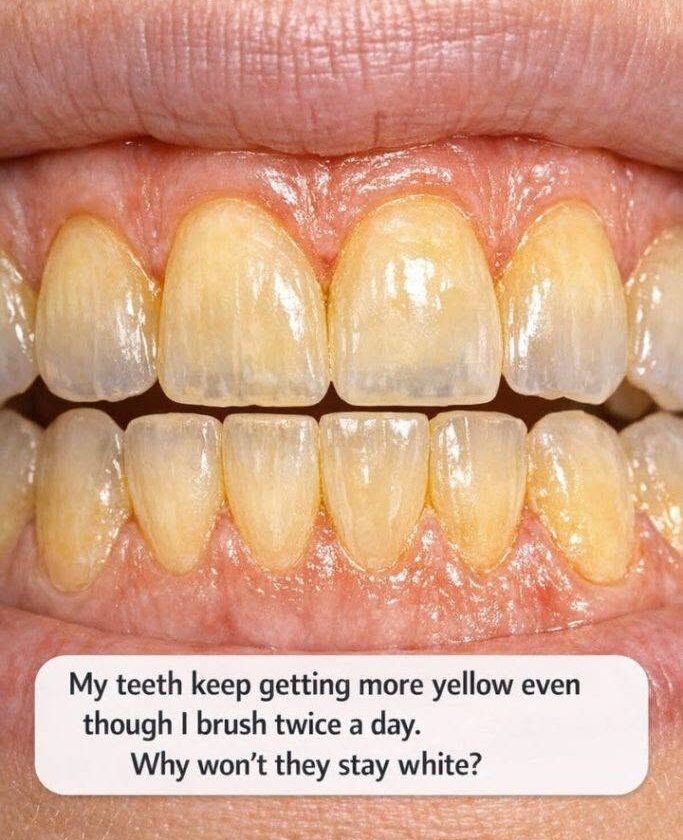
If your teeth are getting more yellow despite brushing twice a day, it does not necessarily mean you’re doing anything wrong. Brushing removes plaque and surface buildup, but many causes of yellowing happen deeper in the tooth or come from daily habits.
Common reasons teeth become yellow
1. Natural tooth color
- Teeth are not naturally pure white. The inner layer of the tooth (dentin) is naturally yellowish and can show through enamel, especially as enamel becomes thinner with age.
2. Staining foods and drinks
Common causes of surface stains include:
- Coffee and tea
- Red wine
- Cola and dark-colored drinks
- Curry and strongly colored foods
- Smoking or tobacco products
3. Enamel thinning
Over time, enamel can wear down from:
- Acidic foods and drinks
- Acid reflux
- Aggressive brushing
- Normal aging
Thinner enamel makes the yellower dentin underneath more visible.
4. Brushing technique
Brushing twice daily helps, but:
- Brushing too hard can wear enamel.
- Missing areas between teeth can allow buildup.
- A toothbrush alone cannot remove hardened tartar (calculus).
5. Plaque and tartar buildup
If plaque is not fully removed, it can harden into tartar, which often looks yellow or brown and usually requires professional cleaning.
6. Medications or health factors
Some medications, childhood exposure to certain antibiotics, or dental conditions can affect tooth color.
What can help keep teeth looking brighter
- Brush gently for about 2 minutes twice daily with fluoride toothpaste.
- Clean between teeth with floss or interdental brushes.
- Rinse with water after coffee, tea, or acidic foods.
- Avoid brushing immediately after acidic drinks (wait about 30 minutes).
- Consider a professional dental cleaning if you have tartar buildup.
- Ask a dentist about safe whitening options if you want a lighter shade.
When to see a dentist
A dental check is a good idea if:
- Yellowing appeared suddenly
- One tooth changed color
- You have pain, sensitivity, bleeding gums, or bad breath
- Whitening products do not improve the appearance
A dentist can determine whether the color is from surface stains, tartar, enamel changes, or natural tooth shade.