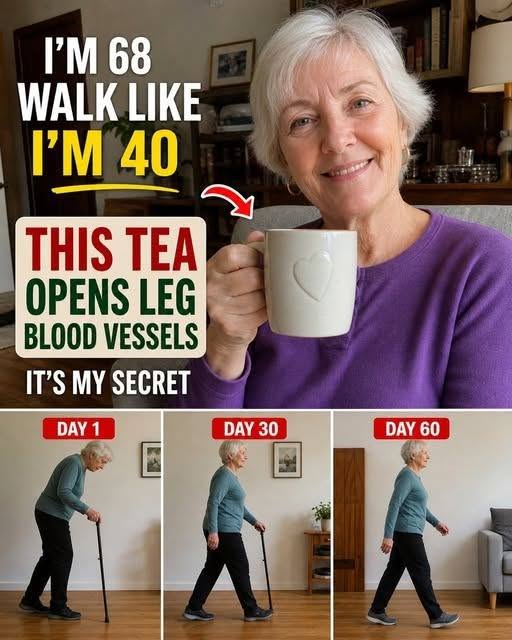
That headline is attention-grabbing, but it’s misleading. No tea has been shown to rebuild muscle on its own or restore walking strength in older adults.
If you’re over 60, some teas may support overall health, but maintaining or rebuilding muscle depends primarily on:
- Eating enough protein (generally around 1.0–1.2 g/kg of body weight per day for many healthy older adults, though individual needs vary).
- Regular strength or resistance exercise.
- Getting enough vitamin D and addressing any nutritional deficiencies.
- Managing underlying medical conditions.
Three teas that may offer supportive benefits include:
- Green tea
- Rich in antioxidants called catechins.
- May help reduce inflammation and support recovery from exercise.
- Contains a small amount of caffeine, which can improve exercise performance for some people.
- It does not directly rebuild muscle.
- Black tea
- Contains flavonoids that may support cardiovascular health.
- May help you stay alert during physical activity because of its caffeine content.
- Again, it doesn’t increase muscle mass by itself.
- Ginger tea
- May help reduce muscle soreness and support joint comfort.
- Can be a good choice if stiffness makes exercise more difficult.
- It won’t reverse muscle loss, but it may make movement more comfortable for some people.
The most effective combination for rebuilding muscle after age 60 is:
- Resistance training 2–3 times per week.
- Consuming 25–35 grams of high-quality protein at each meal.
- Staying physically active every day (walking, balance exercises, and mobility work).
- Getting adequate sleep and hydration.
If the headline came from a video or article promoting a “miracle tea,” it’s worth viewing those claims skeptically. The evidence consistently shows that nutrition and exercise—not a specific tea—are the key drivers of maintaining and rebuilding muscle with age.