The kidneys play an essential role in filtering waste, balancing fluids and electrolytes, and helping regulate blood pressure. Early kidney disease often causes no symptoms, so unusual signs should be evaluated in context and, if needed, confirmed with blood and urine tests.
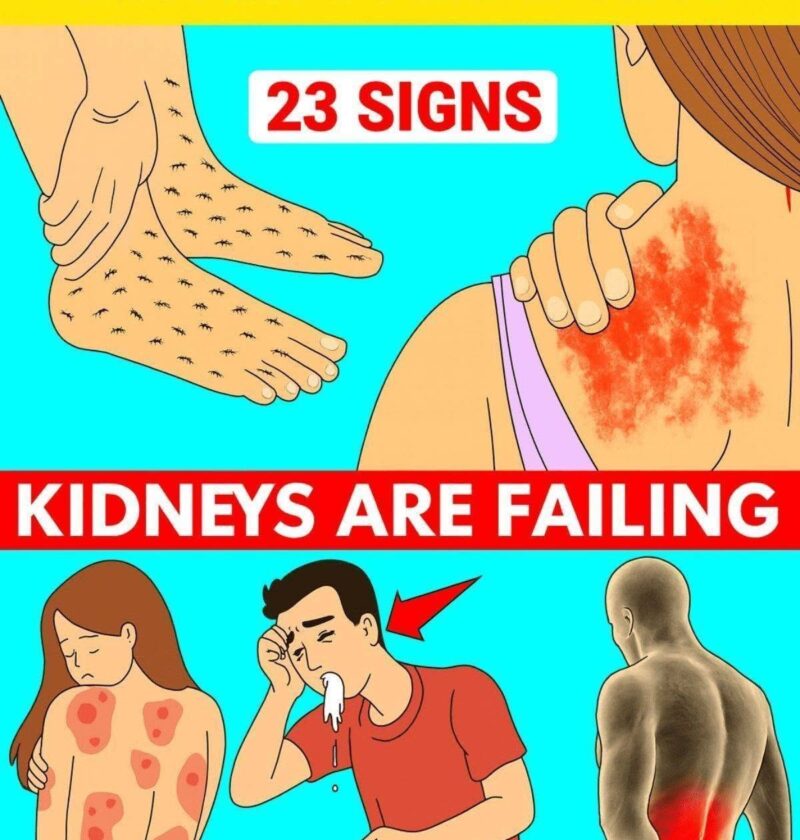
Here are 23 signs that may be associated with kidney problems:
- Fatigue or low energy
- Swelling of the feet, ankles, legs, or around the eyes
- Changes in urination (more or less frequent than usual)
- Foamy or bubbly urine (can indicate excess protein)
- Blood in the urine
- Dark-colored urine
- Pain or burning during urination (often due to infection rather than kidney disease itself)
- Persistent high blood pressure
- Loss of appetite
- Nausea or vomiting
- Metallic taste in the mouth
- Persistent itching
- Muscle cramps, especially in the legs
- Difficulty concentrating
- Shortness of breath (sometimes related to fluid buildup or anemia)
- Difficulty sleeping
- Puffiness around the eyes
- Dry skin
- Flank pain (pain in the side or back near the kidneys)
- Frequent nighttime urination
- Unexplained weight loss
- Persistent bad breath (can occur in advanced kidney disease)
- General weakness
These symptoms are not specific
Many of these signs can also be caused by dehydration, infections, heart disease, diabetes, medication side effects, or other conditions. They do not necessarily mean you have kidney disease.
When to seek medical attention
Arrange medical evaluation if you have:
- Blood in your urine
- Persistent swelling
- Ongoing changes in urination
- Uncontrolled high blood pressure
- Symptoms that persist or worsen
Seek urgent medical care if you have:
- Severe flank pain with fever
- Inability to urinate
- Blood in the urine with severe pain
- Sudden shortness of breath or severe swelling
Who should be screened?
People with diabetes, high blood pressure, a family history of kidney disease, or older age are at higher risk and may benefit from periodic kidney function tests, even if they feel well. Early detection can help slow or prevent progression of kidney disease.