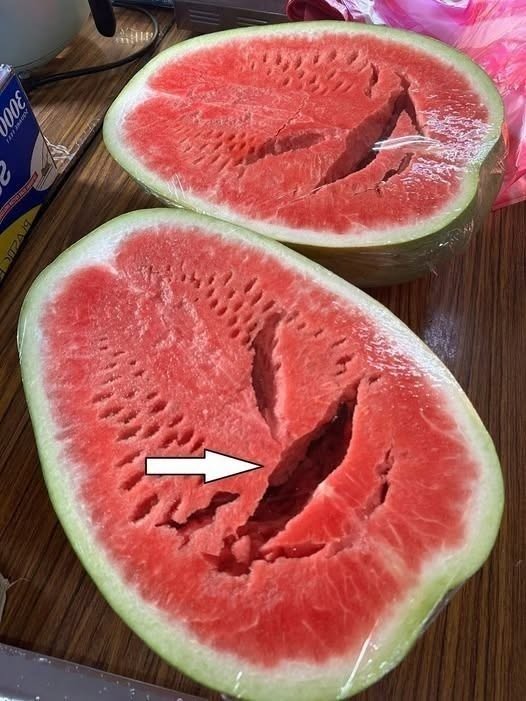
If you cut open a watermelon and see cracks inside, it does not automatically mean it is dangerous or spoiled. The meaning depends on the type of cracking and the watermelon’s condition.
- Large cracks or splits in the flesh (“hollow heart” or internal cracking): These are usually caused by uneven growth, temperature changes, irregular watering, or stress during development. The fruit may still be safe to eat if it smells fresh, looks normal, and has a firm texture.
- White, dry, fibrous cracks: Often a sign of internal stress or poor texture rather than contamination.
- Dark, mushy, wet, slimy cracks, sour smell, fermentation, or mold: These are warning signs. Discard the watermelon.
- Cracks that reach the rind before cutting: A pre-existing split can allow bacteria to enter, especially if the fruit has been sitting for a while.
A simple check:
- Smell it — fresh watermelon should smell sweet and mild.
- Look for mold, slime, discoloration, or bubbling.
- Taste only if it passes the first checks.
So the claim “stop eating it immediately” is an exaggeration. Internal cracks alone are not proof that a watermelon is unsafe.