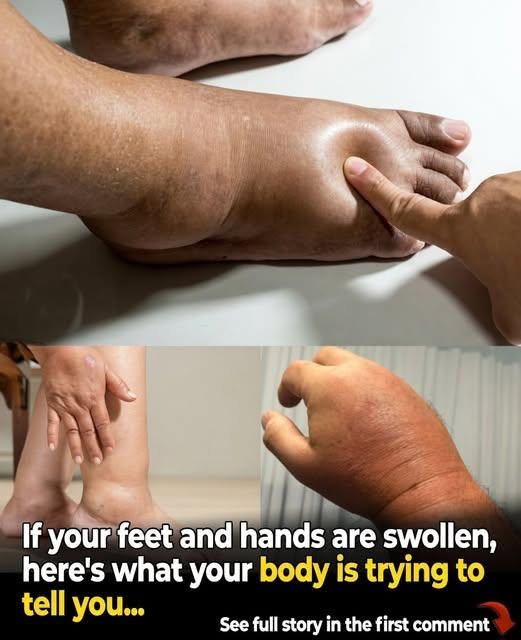
Swollen hands and feet (edema) happen when fluid builds up in the tissues. Sometimes it’s harmless and temporary, but it can also signal an underlying health problem—especially if it’s persistent or sudden.
Common Causes of Swollen Hands and Feet
1. Heat and fluid retention (very common)
- Hot weather causes blood vessels to expand
- Fluid leaks into tissues, especially in feet and ankles
- Often worse at the end of the day
Usually harmless and improves with cooling and elevation.
2. Too much salt (diet-related swelling)
- High sodium causes the body to retain water
- Swelling may appear in hands, feet, or face
Fix: reduce salty processed foods and drink more water.
3. Standing or sitting too long
- Gravity pulls fluid into lower limbs
- Common in jobs requiring long hours of standing or travel
Fix: movement breaks, leg elevation, walking
4. Pregnancy
- Hormonal changes increase fluid retention
- Pressure on veins slows circulation
Usually normal, but sudden swelling needs medical attention.
5. Injuries or inflammation
- Sprains, infections, or local trauma
- Swelling usually limited to one area
6. Allergic reactions
- Can cause sudden swelling of hands, feet, or face
- May include itching or rash
7. Medications
Some drugs can cause fluid retention, such as:
- Blood pressure medications
- Steroids
- Anti-inflammatory drugs
Hidden or Serious Causes (Important)
1. Heart problems
When the heart doesn’t pump efficiently, fluid backs up into the body.
Warning signs:
- Swelling in both legs
- Shortness of breath
- Fatigue
2. Kidney disease
Kidneys regulate fluid balance. When they fail:
- Swelling appears in hands, feet, or around eyes
- Urine changes may occur
3. Liver disease
Low protein production leads to fluid leakage into tissues.
4. Venous insufficiency
Veins in the legs don’t return blood properly:
- Chronic ankle swelling
- Heaviness or aching in legs
5. Lymphatic blockage (lymphedema)
- Persistent swelling, often one-sided
- Can follow surgery or infection
When swelling is dangerous 🚨
Seek medical help if you notice:
- Sudden or severe swelling
- Swelling with chest pain or breathlessness
- One leg much more swollen than the other
- Swelling with fever or redness
- Ongoing swelling that doesn’t improve
Simple ways to reduce mild swelling
- Elevate hands/feet above heart level
- Reduce salt intake
- Drink enough water (dehydration worsens retention)
- Walk or move regularly
- Wear loose clothing and avoid tight socks
- Cool environment during hot weather
If you want, tell me:
- how long the swelling has been happening
- whether it’s both sides or one side
- any pain, shortness of breath, or medical conditions
I can help narrow down the most likely cause in your case.