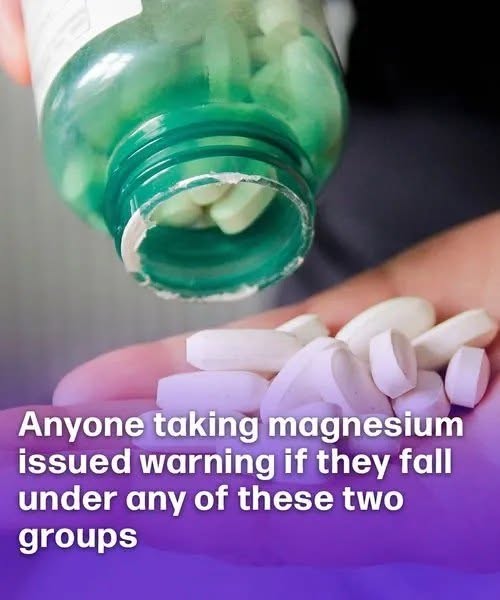
Headlines like this often exaggerate a real but nuanced issue. Magnesium supplements can be beneficial for some people, but they are not risk-free, especially in certain groups.
Two groups that need extra caution
1. People with Kidney Disease
The kidneys normally remove excess magnesium from the body. In people with impaired kidney function, magnesium can build up to unsafe levels.
This is particularly relevant for people with Chronic Kidney Disease.
Possible symptoms of excessive magnesium include:
- Nausea
- Weakness
- Low blood pressure
- Slow heartbeat
- Confusion
Severe toxicity is uncommon but can be serious.
2. People Taking Certain Medications
Magnesium supplements can interact with some medications, including:
- Certain antibiotics
- Some osteoporosis medications
- Certain heart medications
Magnesium may reduce the absorption of some drugs if taken at the same time.
What About Healthy Adults?
For most healthy adults, magnesium supplements are generally safe when used as directed.
However, high doses may cause:
- Diarrhea
- Stomach cramps
- Nausea
This is one reason many people stop taking magnesium supplements.
Food Sources Are Often Preferred
Many people can meet their needs through foods such as:
- Nuts and seeds
- Beans and lentils
- Whole grains
- Leafy green vegetables
Key Takeaway
The “warning” is usually not that magnesium is dangerous for everyone. The main concerns are people with kidney disease and those taking medications that may interact with magnesium. For most healthy adults, moderate supplementation is generally well tolerated, but it’s still wise to discuss long-term use with a healthcare professional if you have medical conditions or take prescription medications.