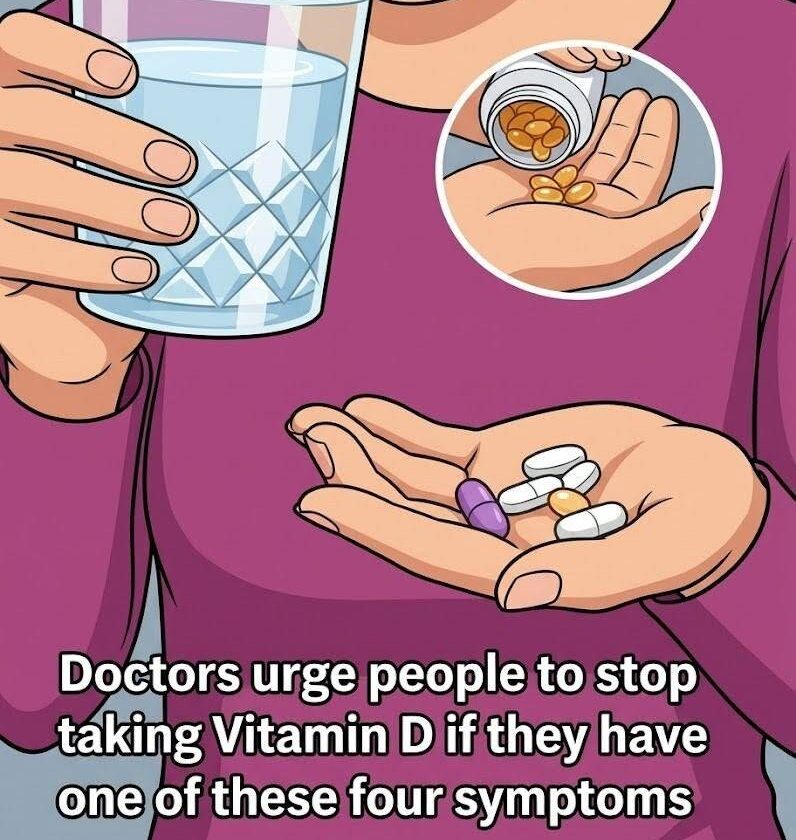
“Important Warning from Doctors: Stop Taking Vitamin D Immediately If You Have These 4 Symptoms” — What You Should Know
This headline is overly dramatic. Vitamin D is an important nutrient and is safe for most people when taken at recommended doses. However, taking too much vitamin D, especially high-dose supplements over time, can lead to vitamin D toxicity, which causes high calcium levels in the blood (hypercalcemia).
If you are taking vitamin D and develop concerning symptoms, don’t automatically stop it based on an online headline. Contact your healthcare professional, who may recommend stopping it temporarily and arranging blood tests if vitamin D toxicity is suspected.
Possible Symptoms of Too Much Vitamin D
1. Persistent Nausea or Vomiting
High calcium levels can cause:
- Nausea
- Vomiting
- Loss of appetite
2. Excessive Thirst and Frequent Urination
Too much calcium can make you feel unusually thirsty and cause you to urinate more often.
3. Weakness, Fatigue, or Confusion
Severe hypercalcemia may cause:
- Muscle weakness
- Extreme tiredness
- Confusion
- Difficulty thinking clearly
4. Kidney Problems
High calcium levels can increase the risk of:
- Kidney stones
- Kidney damage
- Pain in the side or back (in some cases)
Who Is Most at Risk?
Vitamin D toxicity is uncommon but is more likely in people who:
- Take very high-dose vitamin D supplements for long periods
- Accidentally take more than the recommended dose
- Have certain medical conditions that affect calcium or vitamin D metabolism
Getting too much vitamin D from sunlight or food alone is extremely unlikely.
Take Vitamin D Safely
- Take the dose recommended by your healthcare professional or as directed on the product label.
- Avoid combining multiple supplements that all contain vitamin D unless advised.
- If you’re taking high-dose vitamin D for a medical reason, your healthcare professional may periodically check your blood calcium and vitamin D levels.
When to Seek Urgent Medical Care
Seek prompt medical attention if you have:
- Severe vomiting
- Confusion
- Severe weakness
- Signs of dehydration
- Severe abdominal pain or symptoms suggesting kidney stones