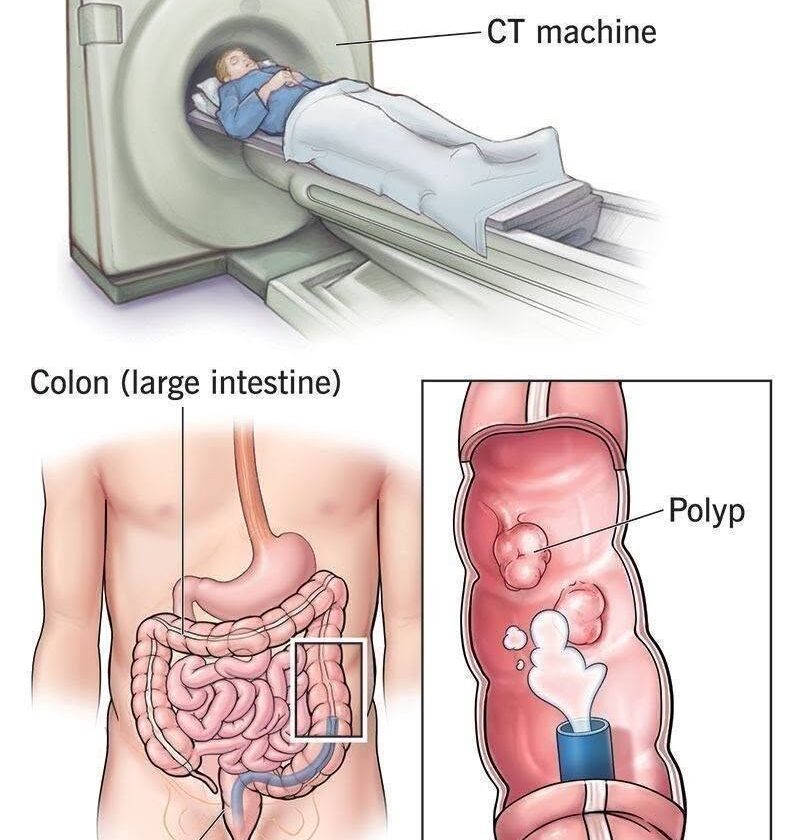
“New method: colonoscopy will no longer be an invasive examination. (1/2)”
is written like a medical news teaser. It suggests that a new technology may replace traditional colonoscopy, but the claim needs context.
There are already less invasive alternatives to traditional colonoscopy, including:
- CT colonography (“virtual colonoscopy”) — uses CT imaging to create a view of the colon without inserting a camera through the entire colon. It can detect larger polyps and cancers, but if something suspicious is found, a traditional colonoscopy may still be needed for biopsy or removal.
- Stool-based screening tests — such as fecal immunochemical tests (FIT) and stool DNA tests, which look for signs of colorectal cancer without an invasive procedure.
- Emerging technologies — researchers are studying advanced imaging, artificial intelligence, and capsule-based devices (small cameras swallowed like a pill) that may reduce the need for some traditional examinations.
However, standard colonoscopy remains an important tool because it allows doctors to:
- directly view the colon lining,
- remove precancerous polyps during the same procedure,
- take tissue samples when needed.
So the statement “colonoscopy will no longer be invasive” is likely an overstatement. The future may bring more comfortable screening options, but traditional colonoscopy is still widely used and has unique advantages.