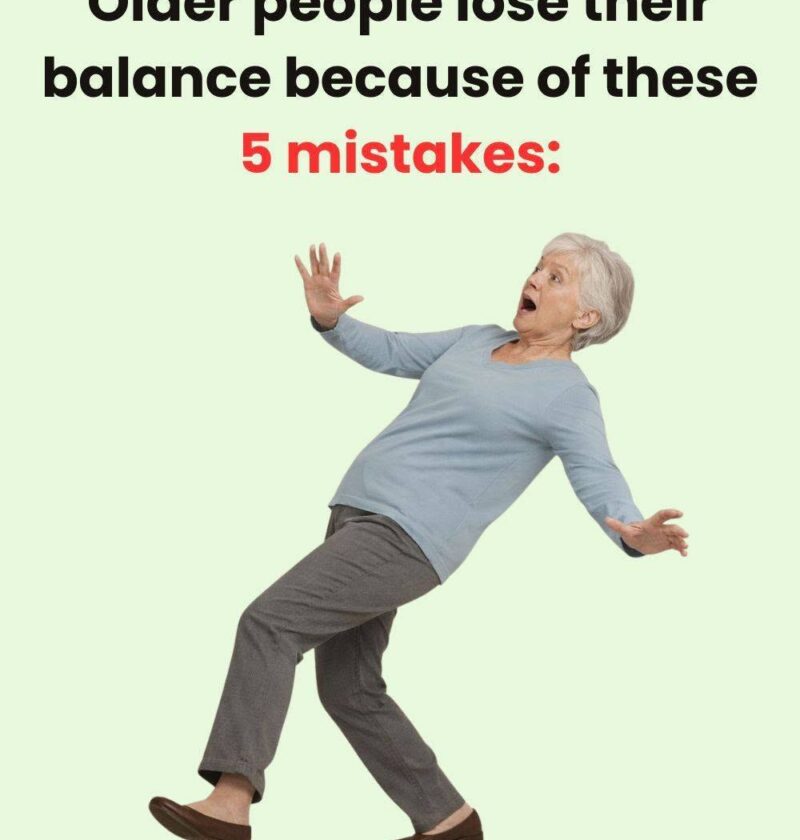
“Common Mistakes That Affect Balance in Older Adults!!”
is a common health headline. Balance changes can become more common with aging, but they are not an unavoidable part of getting older. Many factors—muscle strength, vision, medications, activity level, and the home environment—can influence balance.
Common mistakes that may worsen balance
1. Avoiding exercise because of fear of falling
Less movement can lead to:
- Weaker leg muscles
- Reduced coordination
- Less confidence while walking
Strength, balance, and flexibility exercises can help maintain stability.
2. Wearing unsafe footwear
Shoes that may increase fall risk include:
- Loose slippers
- High heels
- Shoes with worn-out soles
- Poorly fitting footwear
Supportive, well-fitting shoes can improve stability.
3. Ignoring vision changes
Poor vision can make it harder to:
- Judge distances
- See obstacles
- Navigate uneven surfaces
Regular eye checks are important.
4. Taking medications without reviewing side effects
Some medications may contribute to dizziness or balance problems, including certain:
- Sleep medicines
- Blood pressure medications
- Anti-anxiety medications
A healthcare professional can review medications if balance changes occur.
5. Not addressing dizziness or weakness
Frequent dizziness, lightheadedness, or new unsteadiness should not simply be dismissed as “normal aging.”
6. Creating fall hazards at home
Common risks include:
- Loose rugs
- Poor lighting
- Cluttered walkways
- Lack of grab bars where needed
7. Sitting too much
Long periods of inactivity can reduce:
- Muscle strength
- Reaction time
- Endurance
Regular movement helps preserve mobility.
8. Skipping strength training
Leg and core strength play an important role in staying steady. Exercises such as supervised squats, step-ups, and resistance training can help many older adults.
9. Not getting enough protein or nutrients
Adequate nutrition supports muscle maintenance. Low muscle strength can affect balance and increase fall risk.
When to seek medical advice
A healthcare professional should evaluate:
- New or worsening balance problems
- Repeated falls
- Sudden dizziness
- Weakness on one side of the body
- Numbness or changes in walking ability
Maintaining balance is usually a combination of strong muscles, good vision, safe surroundings, regular activity, and addressing health issues early.