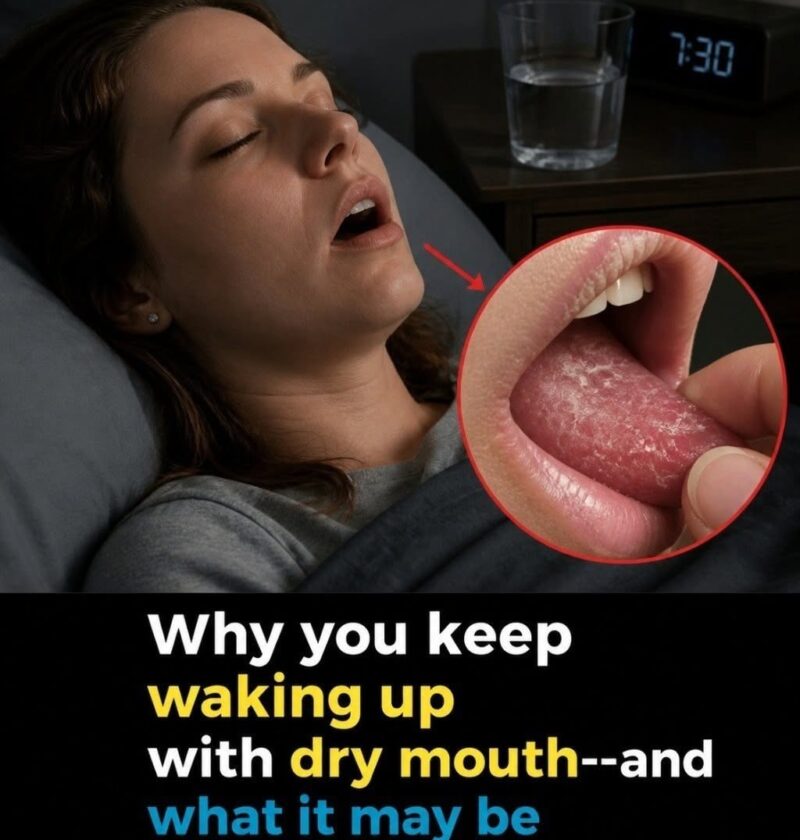
The headline “Waking up with dry mouth? Here’s what your body might be telling you” is a common health teaser. Waking with a dry mouth is very common and can have many possible causes—some harmless, others worth checking if persistent.
Common reasons include:
- Breathing through your mouth while asleep — often due to a blocked nose, allergies, congestion, or sleeping position.
- Snoring or sleep apnoea — people with sleep apnoea often wake with a dry mouth because they may breathe through their mouth during pauses in breathing.
- Dehydration — not drinking enough fluids, alcohol intake, or excessive sweating can contribute.
- Medications — many medicines can reduce saliva production, including some antihistamines, antidepressants, blood pressure medicines, and others.
- Dry indoor air — heating or air conditioning can dry the mouth overnight.
- Smoking or vaping — these can irritate the mouth and affect saliva.
Things that may help:
- Drink enough water during the day.
- Treat nasal congestion if you have it.
- Avoid alcohol close to bedtime.
- Use a humidifier if the air is very dry.
- Maintain good oral hygiene, since reduced saliva can increase the risk of tooth decay.
Consider speaking with a healthcare professional or dentist if:
- the dry mouth is new and persistent,
- you have very frequent thirst or urination,
- you have trouble swallowing, mouth sores, or significant dental problems,
- you snore loudly, gasp during sleep, or feel very tired during the day.
A dry mouth on waking does not automatically mean something is seriously wrong, but it can be a useful clue about sleep habits, hydration, medications, or other health factors.