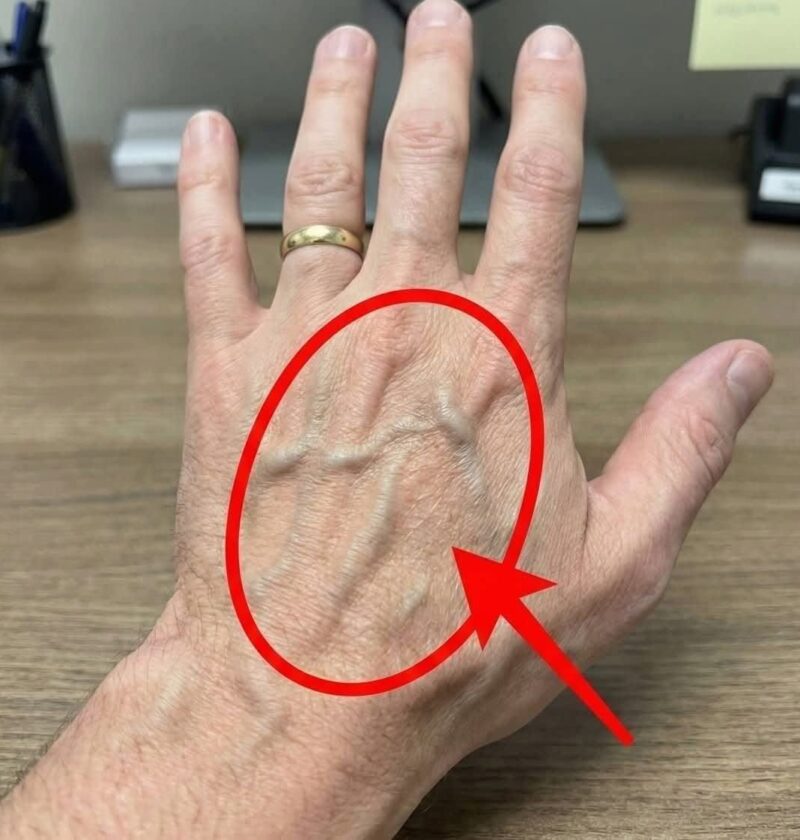
That kind of “If you have visible veins, it means you are…” post is usually clickbait and often leads to misleading or exaggerated health claims.
What visible veins actually mean
Visible veins are usually normal and depend on several harmless factors:
Common, normal reasons
- Low body fat (veins show more through thinner skin/fat)
- Exercise or fitness level (muscles push veins closer to the surface)
- Heat or hot weather (veins expand to cool the body)
- Genetics (some people naturally have more visible veins)
- Age (skin becomes thinner over time)
When visible veins can be medical-related
Sometimes veins become more noticeable due to conditions like:
- Varicose veins (bulging, twisted veins—often in legs)
- Venous insufficiency (blood pools in the legs, causing swelling/heaviness)
- Pregnancy (increased blood volume and pressure)
- Hormonal changes
Important distinction
Visible veins alone:
- Do not automatically mean poor health
- Do not mean you are “strong,” “sick,” or “toxic” as social media often claims
It’s just a normal variation in circulation and body composition in most cases.
When to get checked
See a doctor if visible veins come with:
- Pain or heaviness in legs
- Swelling
- Skin discoloration
- Veins that are bulging, hard, or worsening
Bottom line
Visible veins are usually a normal physical trait, not a hidden health warning or special sign of anything dramatic. The meaning depends entirely on symptoms and context, not appearance alone.
If you want, I can explain how to tell the difference between healthy visible veins vs varicose vein disease in a simple way.