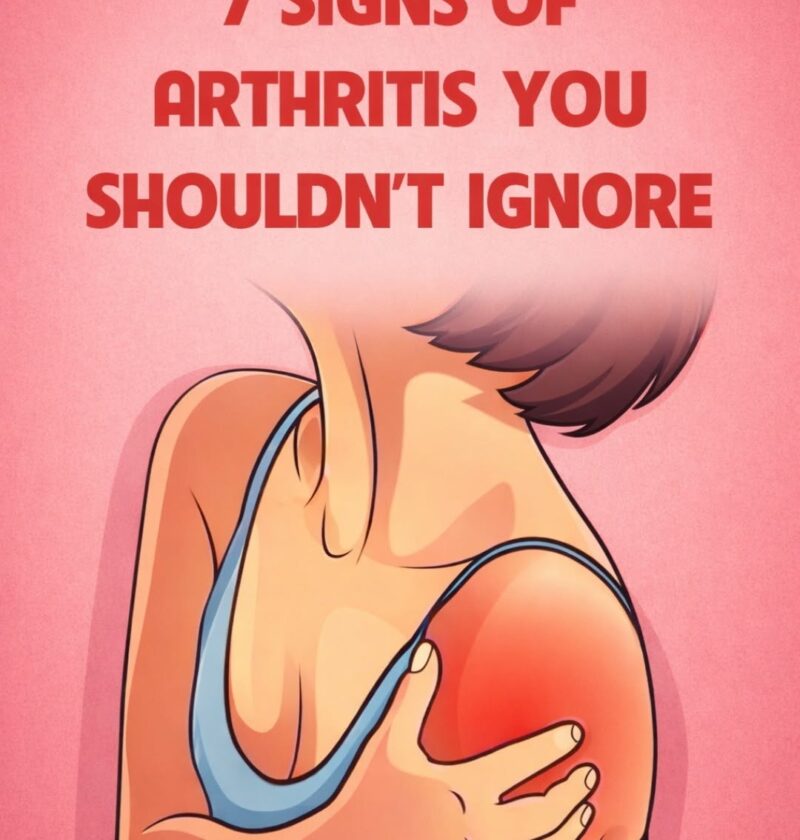
Arthritis is not one single disease—it’s a group of conditions that cause joint inflammation and damage, such as osteoarthritis and rheumatoid arthritis. Early recognition matters because treatment works best when started early.
Here are 7 warning signs of arthritis you shouldn’t ignore:
1. Joint pain that persists
- Pain lasting more than a few weeks
- Worsens with movement (osteoarthritis) or may occur even at rest (inflammatory types)
2. Morning stiffness
- Joints feel stiff after waking up
- Lasts more than 30–60 minutes (more concerning for inflammatory arthritis like rheumatoid arthritis)
3. Swelling in joints
- Visible puffiness around knees, fingers, wrists, or ankles
- Joints may feel warm or tender
4. Reduced range of motion
- Difficulty bending, gripping, or straightening joints
- Everyday tasks become harder (opening jars, climbing stairs)
5. Joint redness or warmth
- Skin over the joint may look red or feel hot
- Often suggests active inflammation
6. Clicking, grinding, or creaking
- Known as crepitus
- Common in wear-and-tear arthritis (osteoarthritis), especially in knees or shoulders
7. Fatigue or general feeling of being unwell
- More common in autoimmune types (like rheumatoid arthritis)
- Can include low energy, mild fever, or weight loss
When to seek medical attention
You should see a healthcare professional if:
- Symptoms last more than 2–3 weeks
- Multiple joints are affected
- There is visible swelling or stiffness in the morning
- Pain is worsening over time
Important context
Arthritis symptoms can overlap with other conditions like:
- Injuries
- Gout
- Infections
- Nerve problems
So diagnosis usually requires clinical examination, blood tests, or imaging (X-ray/ultrasound).
Bottom line
Early arthritis often shows up as persistent pain, stiffness, swelling, and reduced movement—especially if symptoms last weeks or affect daily activities.
If you want, I can also explain the difference between osteoarthritis, rheumatoid arthritis, and gout in a simple comparison chart.