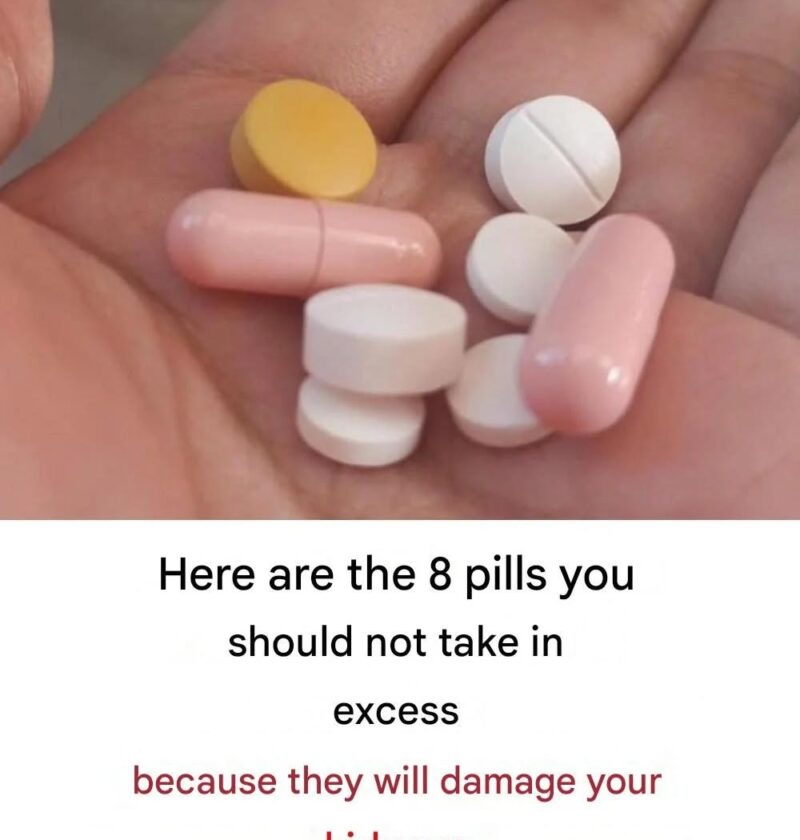
The claim “Eight pills you shouldn’t take because they damage your kidneys” is a common warning-style headline, but the reality is more nuanced: many medications can affect the kidneys in certain situations, especially at high doses, with long-term use, or in people who already have kidney problems. This does not mean everyone should avoid these medicines.
Examples of medicines that can potentially affect kidney function include:
- Nonsteroidal anti-inflammatory drugs (NSAIDs)
Examples: ibuprofen, naproxen, and similar pain relievers. Long-term or high-dose use can reduce blood flow to the kidneys, especially in people who are dehydrated, older, or have kidney disease. - Certain antibiotics
Some antibiotics can stress the kidneys, particularly in people with existing kidney issues or when used at higher doses. - Some blood pressure medicines
Medicines that affect the kidney’s filtration system may change kidney blood tests. They are often beneficial and protective in many patients, but require monitoring. - Diuretics (“water pills”)
These can contribute to dehydration or electrolyte changes if not properly managed. - Certain acid-reducing medicines
Some long-term users of certain proton pump inhibitors (PPIs) have been associated with kidney problems, though the risk varies. - Some antiviral or cancer treatments
Certain specialized medicines can affect kidney function and require monitoring. - Lithium (a mood stabilizer)
Long-term use can affect kidney function in some people and requires regular blood tests. - Some supplements and herbal products
“Natural” products are not automatically kidney-safe; some contain ingredients that can harm kidneys or interact with medicines.
Protecting your kidneys
- Avoid taking painkillers regularly without medical advice.
- Follow dosing instructions.
- Stay hydrated, especially during illness or hot weather.
- Tell your doctor if you have kidney disease, diabetes, high blood pressure, or are older.
- Ask before starting new supplements.
Do not stop prescribed medicines suddenly because of a general warning list. If you tell me the names of the pills you are concerned about, I can explain their kidney risks and what precautions are recommended.