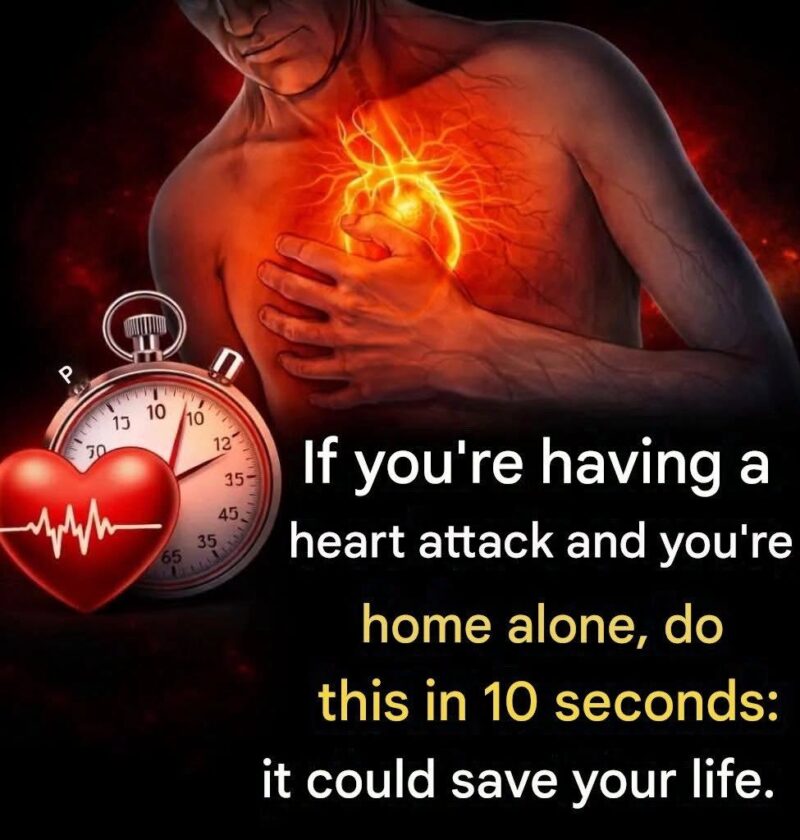
“If You Have a Heart Attack at Home, Do This in 10 Seconds and You Can Save Your Life” — What You Should Actually Do
Headlines like this often promise a quick trick, but there is no guaranteed 10-second action that can stop a heart attack. The most important steps are recognizing the warning signs and getting emergency help quickly.
If you think you’re having a heart attack:
1. 🚨 Call emergency services immediately
- Call your local emergency number (such as 911 in the U.S.).
- Do not try to drive yourself to the hospital.
- If someone is nearby, tell them you may be having a heart attack.
2. 🪑 Stop what you are doing and rest
- Sit or lie in a comfortable position.
- Loosen tight clothing.
- Try to stay as calm as possible while waiting for help.
3. 💊 Take aspirin only if appropriate
If emergency guidance recommends it and you are not allergic, not bleeding, and have not been told to avoid aspirin, chewing a standard dose of aspirin may help in some suspected heart attacks. When in doubt, follow the instructions of emergency dispatchers.
4. ❤️ Know the warning signs
Heart attack symptoms can include:
- Pressure, squeezing, fullness, or pain in the chest
- Pain spreading to the arm, shoulder, back, neck, jaw, or stomach
- Shortness of breath
- Cold sweat
- Nausea or vomiting
- Sudden weakness or unusual fatigue
Women, older adults, and people with diabetes may sometimes have less typical symptoms.
What not to do
❌ Do not cough repeatedly as a “cure” (the viral “cough CPR” claim is not a proven lifesaving method).
❌ Do not wait to see if symptoms go away.
❌ Do not take random medications or supplements as a substitute for emergency care.