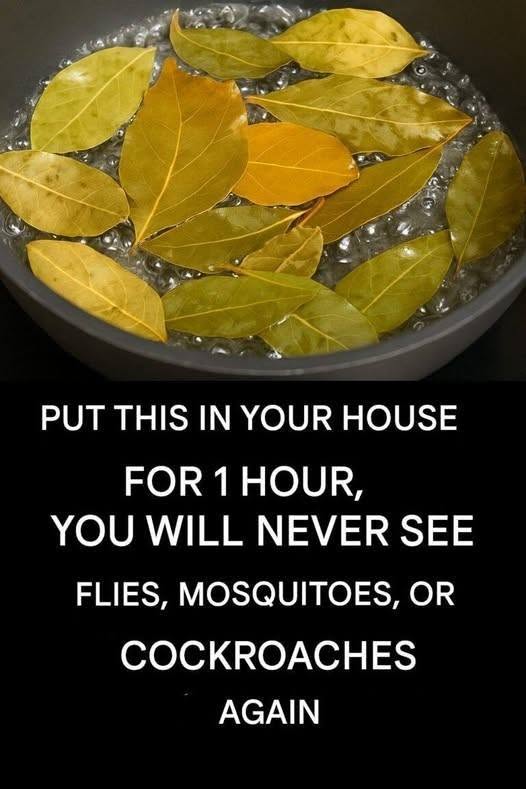
Yes, there is a popular “bay leaf trick” for helping deter some household insects naturally.
How it works
- Bay leaves contain aromatic compounds such as eucalyptol (cineole), linalool, and other essential oils that many insects find unpleasant. (Biology Insights)
- People commonly place whole dried bay leaves in cupboards, pantries, drawers, closets, windowsills, and near entry points to discourage pests such as ants, cockroaches, moths, and some pantry insects. (The Times of India)
Simple method
- Place a few dried bay leaves in:
- Kitchen cabinets
- Pantry shelves
- Flour, rice, or grain storage areas
- Closets and drawers
- Near doors and windows
- Replace them every few months or whenever the scent fades. (Ponto de Arte)
Does it really work?
- Bay leaves may act as a mild repellent or deterrent, especially for pantry pests and ants. (Biology Insights)
- However, evidence suggests they are not a reliable solution for established infestations. They won’t kill insects or eliminate a serious pest problem, and their effectiveness varies by species and situation. (The Environmental Literacy Council)
For best results
Use bay leaves as a supplement to good pest prevention:
- Store food in sealed containers.
- Clean up crumbs and spills promptly.
- Seal cracks and entry points.
- Reduce standing water and excess moisture. (The Environmental Literacy Council)
So the “bay leaf trick” is a low-cost, chemical-free option that may help discourage some insects, but it’s best viewed as a preventive measure rather than a complete pest-control solution.