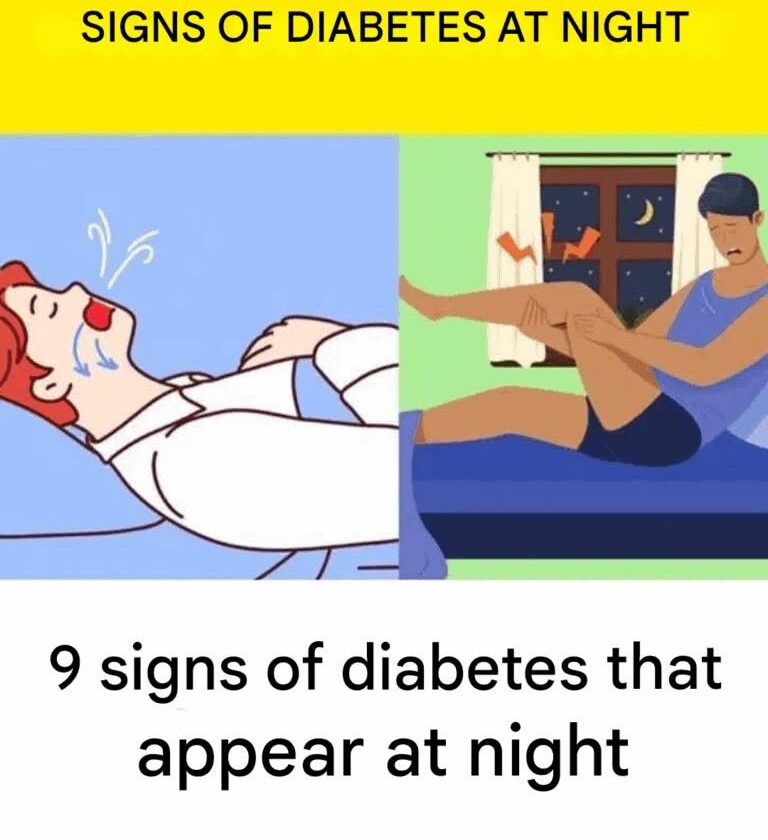
9 Signs of Diabetes That May Appear at Night
Diabetes can cause symptoms at any time of day, but some people notice them more at night. These symptoms do not necessarily mean you have diabetes—they can have many other causes—but they are worth discussing with a healthcare professional if they persist.
1. 🌙 Frequent urination during the night (nocturia)
High blood sugar causes the kidneys to remove excess glucose through urine, which can lead to waking several times to urinate.
2. 💧 Excessive thirst
Losing more fluid through urination can leave you feeling unusually thirsty, including during the night.
3. 😴 Night sweats
People taking insulin or certain diabetes medications may experience low blood sugar (hypoglycemia) overnight, which can cause sweating, nightmares, or restless sleep. Night sweats have many other possible causes too.
4. 🍽️ Waking up hungry
Overnight low blood sugar or poorly controlled blood sugar can sometimes cause hunger during the night or early morning.
5. 😫 Poor sleep
Frequent bathroom trips, thirst, or discomfort can interrupt sleep. Diabetes is also associated with a higher risk of sleep disorders such as sleep apnea.
6. 🦶 Burning, tingling, or numb feet
Diabetic nerve damage (neuropathy) can cause symptoms that may be especially noticeable when you’re lying quietly in bed.
7. 🤕 Leg cramps
Some people with diabetes experience nighttime muscle cramps, although cramps can also result from dehydration, medication side effects, or other conditions.
8. 👁️ Blurred vision
Blood sugar fluctuations can temporarily affect the shape of the eye’s lens, causing blurred vision at any time, including at night.
9. 🩹 Slow-healing sores or frequent infections
This isn’t specifically a nighttime symptom, but it’s an important warning sign of diabetes that shouldn’t be ignored.
When to get checked
Consider seeing a healthcare professional if you have:
- Frequent urination and excessive thirst
- Unexplained weight loss
- Persistent fatigue
- Blurred vision
- Recurrent infections
- Numbness or tingling in your hands or feet
A simple blood test, such as a fasting blood glucose or HbA1c, can help determine whether diabetes or prediabetes is present.