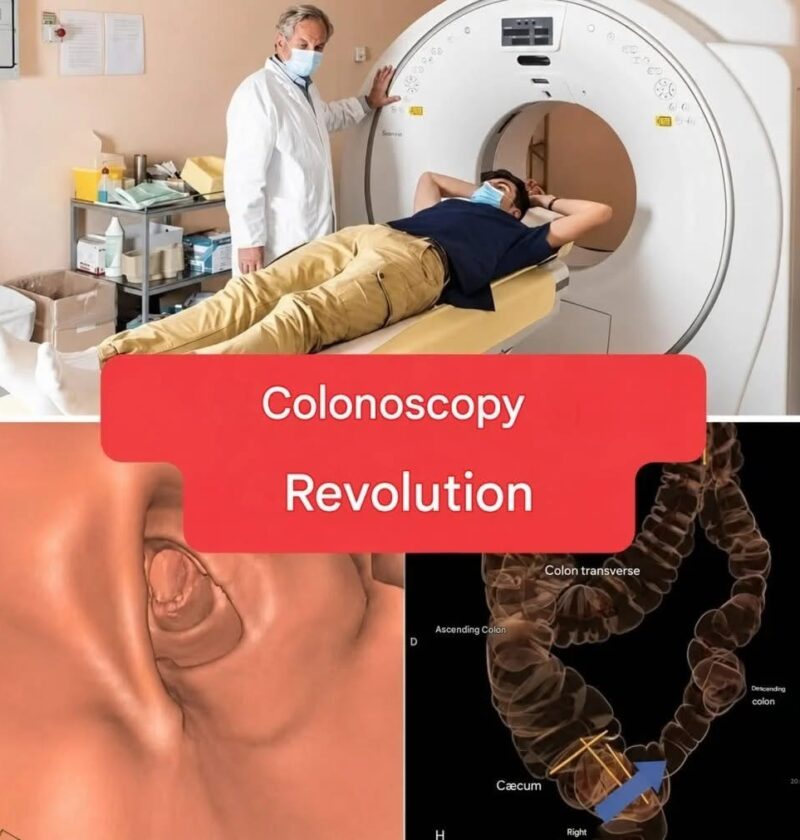
The claim “New method: colonoscopy will no longer be an invasive examination” is a bit misleading. While there have been important advances in colorectal cancer screening, traditional colonoscopy remains an invasive procedure and is still considered one of the most accurate ways to examine the colon.
However, there are less invasive alternatives in some situations:
1. Stool-based screening tests
These tests look for signs of cancer or precancerous changes in stool.
- Fecal immunochemical test (FIT):
- Detects hidden blood in stool.
- Usually done at home.
- Needs to be repeated regularly.
- Stool DNA tests:
- Look for DNA changes and blood associated with colorectal cancer.
- Also performed at home.
If one of these tests is abnormal, a follow-up colonoscopy is usually recommended.
2. CT colonography (“virtual colonoscopy”)
- Uses CT imaging to create pictures of the colon.
- Does not require inserting a camera into the colon.
- Still requires bowel preparation.
- If polyps are found, a traditional colonoscopy may be needed for removal.
3. Improving colonoscopy techniques
Modern colonoscopy has become safer and more comfortable due to:
- Better sedation methods
- Smaller, more flexible scopes
- Improved imaging technology
- More effective polyp detection techniques
Why colonoscopy is still important
A major advantage of colonoscopy is that doctors can:
- Directly view the colon lining.
- Find precancerous polyps.
- Remove polyps during the same procedure, helping prevent colorectal cancer.