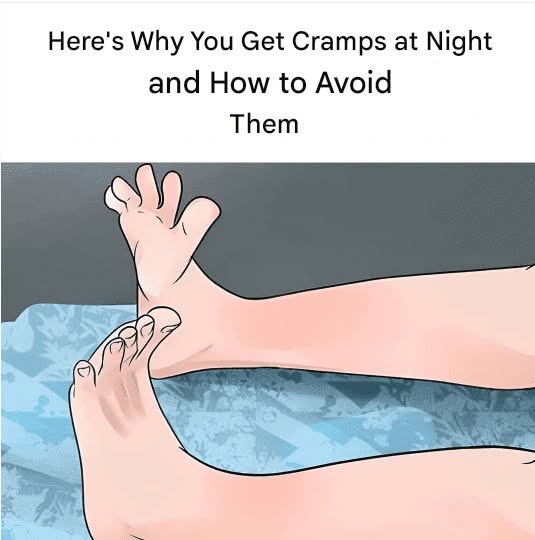
This Is Why We Get Cramps at NightNighttime muscle cramps—especially in the calves, feet, or thighs—are common and can be surprisingly painful. They happen when a muscle suddenly contracts and does not relax right away.
Common reasons nighttime cramps happen
1. Muscle fatigue or overuse
- Long periods of standing, walking, exercise, or unusual physical activity can leave muscles more likely to cramp.
2. Dehydration
- Losing fluids through sweating, heat, or not drinking enough water may contribute to muscle tightness.
3. Staying in one position too long
- Sleeping with the feet pointed downward or sitting for long periods can shorten certain muscles and increase cramp risk.
4. Age-related changes
- As we get older, changes in muscles, nerves, and circulation can make cramps more common.
5. Low levels of certain minerals
- Low levels of electrolytes such as potassium, calcium, or magnesium can contribute in some situations, although many nighttime cramps are not caused by a simple deficiency.
6. Certain medications or health conditions
Night cramps may be associated with some medicines or conditions, including:
- Some diuretics (“water pills”)
- Nerve problems
- Diabetes
- Kidney disease
- Circulation problems
What to do when a cramp strikes
- Gently stretch the affected muscle.
- Massage the area.
- Walk around if you can.
- Apply warmth with a heating pad or warm shower.
Ways to reduce nighttime cramps
- Stretch your calves and legs gently before bed.
- Stay hydrated.
- Wear supportive shoes during the day.
- Increase activity gradually rather than suddenly.
- Maintain a balanced diet.
When to get medical advice
Talk to a healthcare professional if cramps:
- Happen frequently or are getting worse