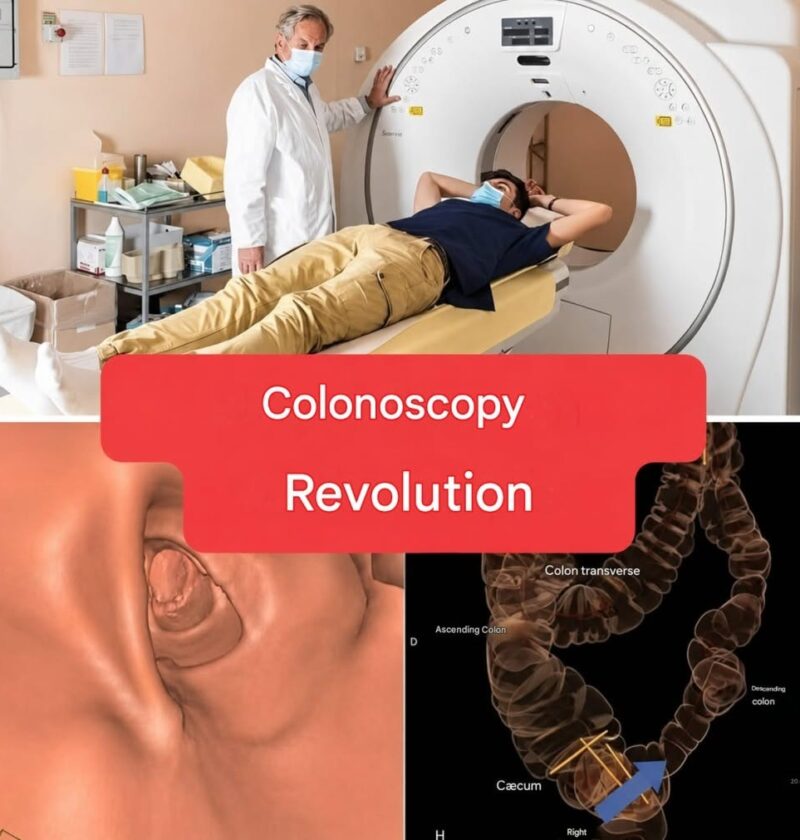
“New Method: Colonoscopy Will No Longer Be an Invasive Examination” — What’s the Reality?
The idea that colonoscopy will soon completely stop being invasive is an oversimplification. Colonoscopy is still an important procedure that uses a flexible camera inserted through the rectum to examine the colon. However, newer screening methods are making colon cancer detection easier and less invasive for some people.
Less invasive alternatives and advances
1. Stool-based screening tests
These tests look for signs of cancer or precancerous changes in stool, such as:
- Hidden blood
- DNA changes from abnormal cells
They do not require a scope, but if a result is abnormal, a colonoscopy is usually still needed for diagnosis and removal of polyps.
2. CT colonography (“virtual colonoscopy”)
- Uses CT imaging to create pictures of the colon.
- Does not require a camera inserted into the colon.
- Still usually requires bowel preparation.
- If polyps or suspicious areas are found, a traditional colonoscopy may be needed.
3. Improving colonoscopy technology
Researchers are working on:
- Smaller and more comfortable devices
- Better imaging systems
- Artificial intelligence tools that help doctors detect polyps
Why colonoscopy remains important
A major advantage of traditional colonoscopy is that doctors can:
- Directly examine the colon lining
- Remove precancerous polyps during the same procedure
- Take biopsies if needed