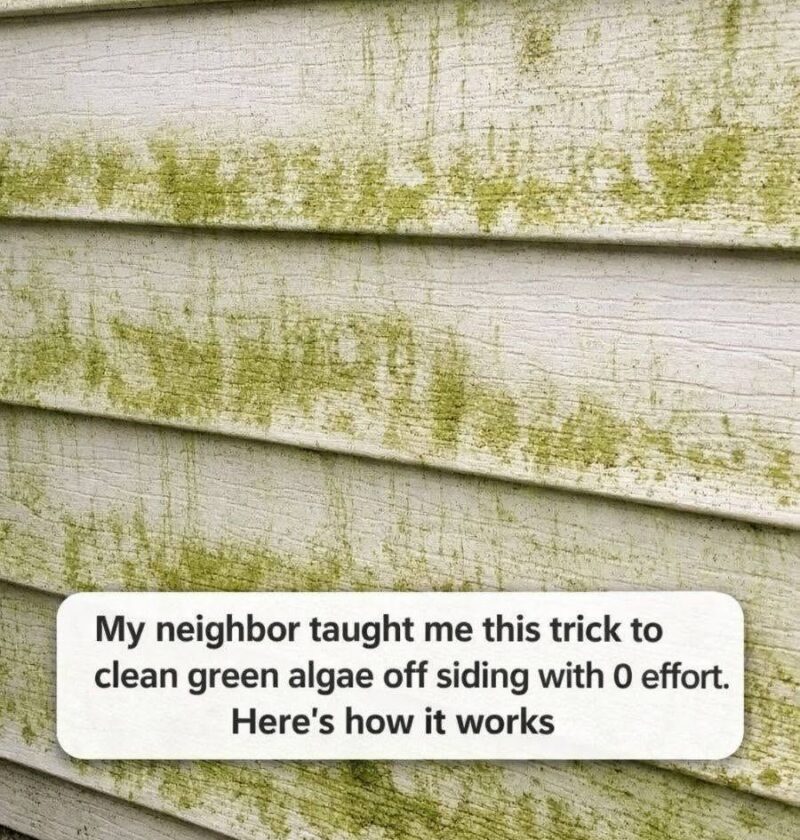
Headlines like “clean green algae off siding with 0 effort” are almost always exaggerated. Algae, mold, and mildew on exterior walls do require some level of scrubbing or chemical action—there’s no true “zero effort” method.
That said, there are effective low-effort ways to clean it.
What the “trick” is usually referring to
Most viral posts are talking about using a spray-and-leave cleaner, often:
- Oxygen bleach solution (sodium percarbonate)
- Diluted household bleach
- Commercial exterior house-wash detergents
These are sprayed on siding and left to break down organic growth before rinsing.
Why algae grows on siding
Green algae typically appears due to:
- Moisture buildup (rain, humidity)
- Shade (less sunlight)
- Poor air circulation
- Dirt or organic residue on surfaces
It’s common on vinyl, painted wood, and shaded exterior walls.
Safe, effective way to remove it
1. Spray and soak method (low effort)
- Use a garden sprayer with an exterior cleaner (oxygen bleach is commonly used)
- Spray affected areas
- Let it sit 10–15 minutes (do not let it dry completely)
- Rinse with a hose or low-pressure washer
This is what most “no scrubbing” videos are actually showing.
2. Gentle scrubbing (for stubborn areas)
Some buildup will still need a soft brush, especially:
- Corners
- Deep stains
- Older growth
3. Prevent it from coming back
- Trim nearby trees to increase sunlight
- Improve airflow around the house
- Clean gutters to reduce moisture runoff
- Wash siding annually or semi-annually
Important safety notes
- Avoid mixing bleach with vinegar or ammonia (toxic gases can form)
- Protect plants and grass from runoff
- Don’t use high-pressure washing on delicate siding (it can cause damage)
Bottom line
There is no true “0 effort” solution—but there is a spray, wait, rinse method that minimizes scrubbing and works well when done safely.
If you want, tell me your siding type (vinyl, brick, painted wood), and I can suggest the safest cleaning mix for it.