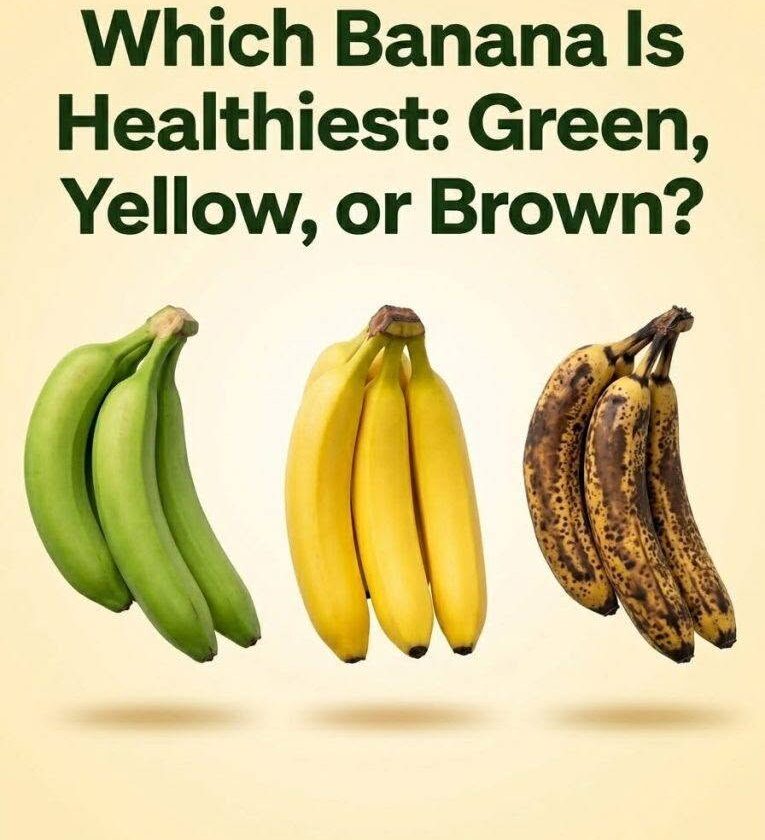
“Which Banana Is Actually the Healthiest”
is a common nutrition headline. The truth is that the healthiest banana depends on what you’re looking for—energy, blood sugar control, digestion, or nutrients.
🍌 Green (unripe) bananas
Best for: gut health and slower blood sugar rise
- Higher in resistant starch, a type of carbohydrate that acts like fiber.
- May help support healthy gut bacteria.
- Usually has a lower glycemic impact than a very ripe banana.
- Can be less sweet and harder to digest for some people.
🍌 Yellow bananas (ripe but firm)
Best for: everyday eating
- A good balance of:
- Natural sweetness
- Fiber
- Potassium
- Vitamin B6
- Easy to digest for most people.
🍌 Spotted or very ripe bananas
Best for: quick energy and cooking
- Higher in natural sugars because starch has broken down.
- Softer and easier to digest.
- Great for smoothies, oatmeal, and baking.
- May raise blood sugar faster than greener bananas.
🍌 Smaller varieties (such as baby bananas)
- Similar nutrients to regular bananas by weight.
- Often sweeter and convenient for portion control.
So which is “healthiest”?
- For blood sugar management: a less-ripe (greener/yellow) banana may be preferable.
- For digestion and resistant starch: greener bananas have an advantage.
- For athletes or quick fuel: ripe bananas can be useful.
- For most people: a normal yellow banana is a nutritious choice.
The idea that one banana is universally “the healthiest” is misleading—the best choice depends on your health goals and how your body responds to it.