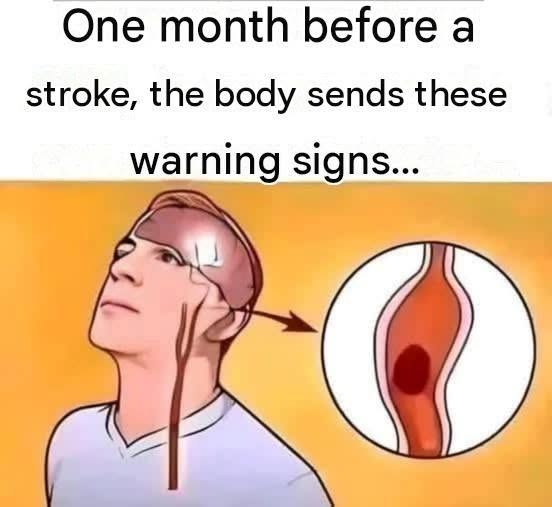
“One Month Before a Stroke, Your Body Sends Warning Signals” — Is It True?
This claim is misleading. Many strokes happen without any warning a month in advance. However, some people experience warning symptoms—especially a transient ischemic attack (TIA), also called a “mini-stroke”—hours, days, or sometimes weeks before a stroke. A TIA is a medical emergency because it can be a sign that a stroke is imminent.
Warning signs that should never be ignored
Seek emergency medical care immediately if you experience any sudden:
- Weakness or numbness of the face, arm, or leg, especially on one side of the body
- Difficulty speaking or understanding speech
- Vision loss or blurred vision in one or both eyes
- Dizziness, loss of balance, or trouble walking
- Severe headache with no known cause
These symptoms may last only a few minutes and then disappear. Do not ignore them—even if they resolve completely.
Remember the FAST test
- F – Face: Does one side of the face droop?
- A – Arms: Is one arm weak or difficult to raise?
- S – Speech: Is speech slurred or difficult?
- T – Time: Call emergency services immediately.
Reduce your risk of stroke
You can lower your risk by:
- Controlling high blood pressure
- Managing diabetes and cholesterol
- Not smoking
- Exercising regularly
- Eating a balanced diet
- Maintaining a healthy weight
- Taking prescribed medications as directed
- Managing heart conditions such as atrial fibrillation