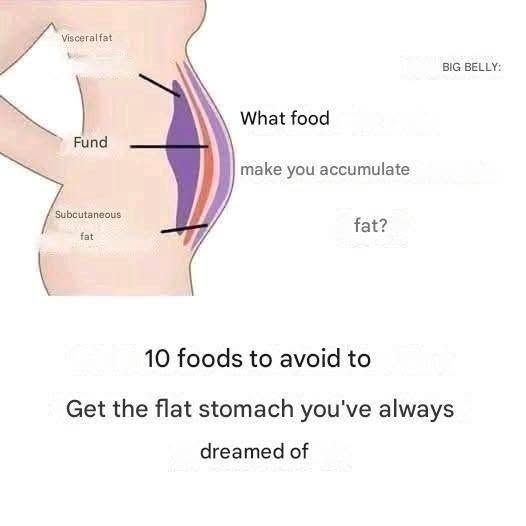
That said, some foods can contribute to bloating, gas, or excess calorie intake in some people.
Foods that may make your stomach feel more bloated
1. 🥤 Sugary drinks
- Sodas, sweetened juices, and energy drinks add calories quickly and can contribute to weight gain.
- Carbonation can also increase gas for some people.
2. 🍟 Highly processed foods
Examples:
- Chips
- Packaged snacks
- Fast food
These often contain high amounts of calories, sodium, and refined carbohydrates.
3. 🧂 Very salty foods
High sodium intake can cause temporary water retention, making some people feel puffier.
4. 🍞 Refined carbohydrates
Examples:
- White bread
- Pastries
- Many sugary cereals
They can be less filling than high-fiber alternatives and may make it easier to overeat.
5. 🍬 Sugar alcohols (for some people)
Found in some “sugar-free” products:
- Sorbitol
- Xylitol
- Mannitol
They can cause gas and bloating in sensitive individuals.
6. 🍺 Alcohol (especially in excess)
Alcohol can:
- Add extra calories
- Affect appetite control
- Contribute to bloating
7. 🥛 Dairy (only if you are lactose intolerant)
Milk, ice cream, and some dairy products can cause:
- Gas
- Bloating
- Abdominal discomfort
in people who have difficulty digesting lactose.
8. 🫘 Certain gas-producing foods (depending on the person)
Healthy foods such as:
- Beans
- Lentils
- Some cruciferous vegetables (broccoli, cabbage)
can cause temporary gas while still being nutritious.
9. 🍕 Large portions of rich foods
High-fat meals can slow digestion and make some people feel overly full.
10. 🍭 Frequent sweets and desserts
Regular high-sugar foods can make it harder to maintain a calorie balance needed for fat loss.
Foods that often support a healthier waistline
✅ Vegetables and fruits
✅ Protein-rich foods (fish, eggs, beans, poultry, tofu)
✅ Whole grains
✅ Nuts and seeds in reasonable portions
✅ Plenty of water
✅ High-fiber foods (introduced gradually if they cause bloating)
A realistic note
A “flat stomach” is not a reliable measure of health, and even healthy people naturally have some abdominal shape. If your goal is reducing belly fat or bloating, the most effective approach is usually a combination of balanced eating, regular activity, adequate sleep, and identifying foods that personally trigger discomfort.